Wet Sieving Apparatus - (Fly Ash Testing Apparatus) About
Wet Sieving Apparatus
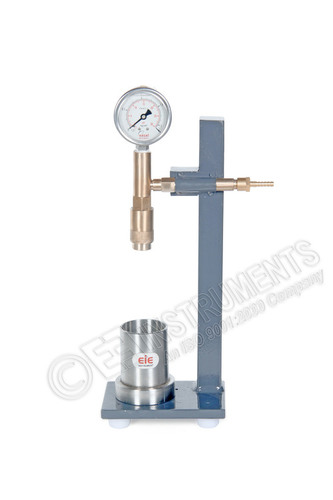
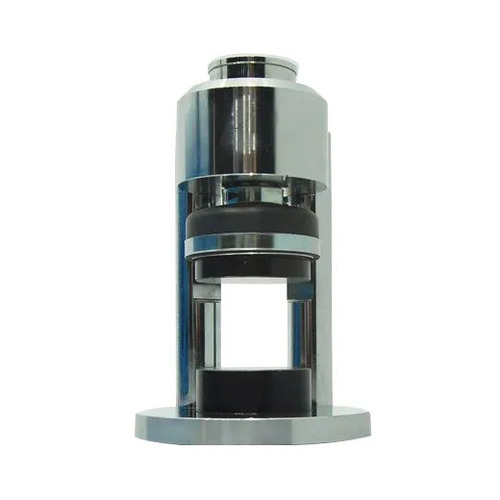
Wet Sieving Apparatus is used for determining the fineness of fly ash.
Further details available on our website.
The Price mentioned here are subject to change as per the capacity, specifications and application of the user.
Precision Testing for Fly Ash FinenessEngineered for reliable assessment of fly ash fineness, this apparatus strictly follows IS: 1727 and IS: 3812 standards. The machine accommodates one sample per test cycle, employing continuous wet sieving to ensure accurate classification and granular analysis. Its robust mild steel body is powder-coated, offering both stability and corrosion resistance in laboratory environments.
User-Friendly Operation and Durable DesignThe Wet Sieving Apparatus features a manual switch for straightforward control and maintenance. Accessories such as sieve frames, collection pans, and brushes simplify the cleaning and testing process. Built for longevity, its mild steel construction with a water-tight sieve assembly withstands repeated laboratory use, even in high-humidity conditions up to 90%.
FAQs of Wet Sieving Apparatus - (Fly Ash Testing Apparatus):
Q: How is the Wet Sieving Apparatus used in fly ash testing?
A: This apparatus is employed to determine the fineness of fly ash by passing a water-suspended sample through specific brass or stainless steel sieves, as per IS: 1727 and IS: 3812. The manual operation involves loading a 50 g sample, connecting water, and activating the sieving process using the switch for continuous test stroke.
Q: What are the advantages of using a mild steel, powder-coated body for this apparatus?
A: The mild steel, powder-coated body enhances durability and provides excellent corrosion resistance, making the apparatus suitable for repeated use in laboratory environments prone to moisture and chemical exposure.
Q: When should the sieves and other accessories be cleaned or maintained?
A: After each testing cycle, the sieve frame, collection pan, and brush should be cleaned with water to prevent residue buildup and maintain measurement accuracy. Regular cleaning ensures longevity and repeatable testing conditions.
Q: Where should the Wet Sieving Apparatus be installed for optimal performance?
A: It should be bench-mounted in a laboratory setting with access to a clean water inlet, a stable 230 V AC power supply, and ambient conditions within 5C to 45C and up to 90% humidity.
Q: What is the main process involved in testing with this equipment?
A: The process entails weighing a fly ash specimen, placing it in the sieve frame, supplying clean water, and operating the machine at a standard 2800 rpm. The fineness is visually assessed once the sample passes through the 75 or 45 micron sieve, providing immediate results.
Q: How accurate are the test results and what is the resolution?
A: Results are accurate within 1%, and if a digital balance is used during the preparation or verification stage, it provides a resolution of 0.01 grams.
Q: What benefits does this apparatus offer to cement and fly ash testing labs?
A: It delivers reliable, immediate fineness results, helping labs comply with IS standards while ensuring consistent quality assessments. Its rugged build and corrosion resistance make it suitable for busy testing environments.
 Call Us : 08045477242









 Send Inquiry

 Send Inquiry
 Send Inquiry
 Send SMS
 Call Me Free