 Call Us : 08045477242


|
Application:
Mainly used to measure the puncture strength as well as the fabric quality to withstand aggregate penetration.
Details:
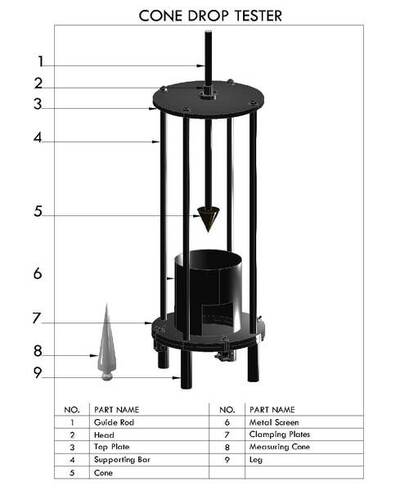
EIE Cone drop tester specifies a method to determine the resistance of Geosynthetics to penetration by a steel cone dropped from a fixed height. The degree of penetration is an indication of the behavior of the Geosynthetic, when sharp stones are dropped on its surface. The smaller the hole, the greater the resistance of geosynthetic OR geotextile to damage and vise versa.
The specimen is clamped between two steel rings. A steel cone is dropped from a height of 500 mm onto the center of the specimen. The degree of penetration is measured by insertion of a graduated cone into the hole. Graduated conical measure will be the part of standard supply.
Further details availableon our website.
The Price mentioned here are subject to change as per the capacity,specifications and application of the user.

Price:
Price 1585200.00 INR / Piece
Minimum Order Quantity : 1 Piece
Features : Sturdy frame, Userfriendly controls, Precision loading
Frequency : 50/60 Hz
Usage : Rock Testing Equipment
Product Type : TRIAXIAL TESTING MACHINE FOR ROCK
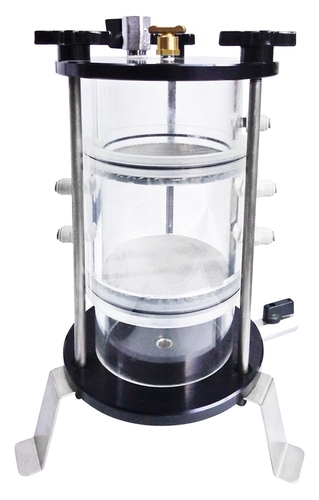
Price 90000.00 INR / Piece
Minimum Order Quantity : 1 Piece
Features : Corrosionresistant sample holder, Leakproof assembly, Easy clamp system
Frequency : 50 Hz
Usage : Geotextile & Soil Permeability Test
Product Type : Gradient Ratio Test Apparatus
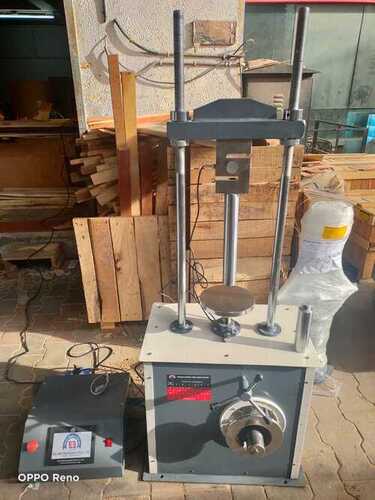
Price 230000.00 INR / Piece
Minimum Order Quantity : 1 Piece
Features : Motorized loading, digital display, automatic data acquisition, limit switch protection
Frequency : 50 Hz
Usage : Rock Testing Equipment
Product Type : UNCONFINED COMPRESSION TESTER FOR ROCK DIGITAL MOTORIZED

Minimum Order Quantity : 1 Piece
Features : Corrosionresistant, portable design, easy calibration, multipurpose
Frequency : 50 Hz
Usage : Drilling Fluid Testing Equipment
Product Type : Drilling Fluid Testing Equipment

 |
EIE INSTRUMENTS PVT. LTD.
All Rights Reserved.(Terms of Use) Developed and Managed by Infocom Network Private Limited. |




 Send Inquiry

 Send Inquiry
 Send Inquiry
 Send SMS
 Call Me Free