CYCLIC PLATE LOAD TEST About
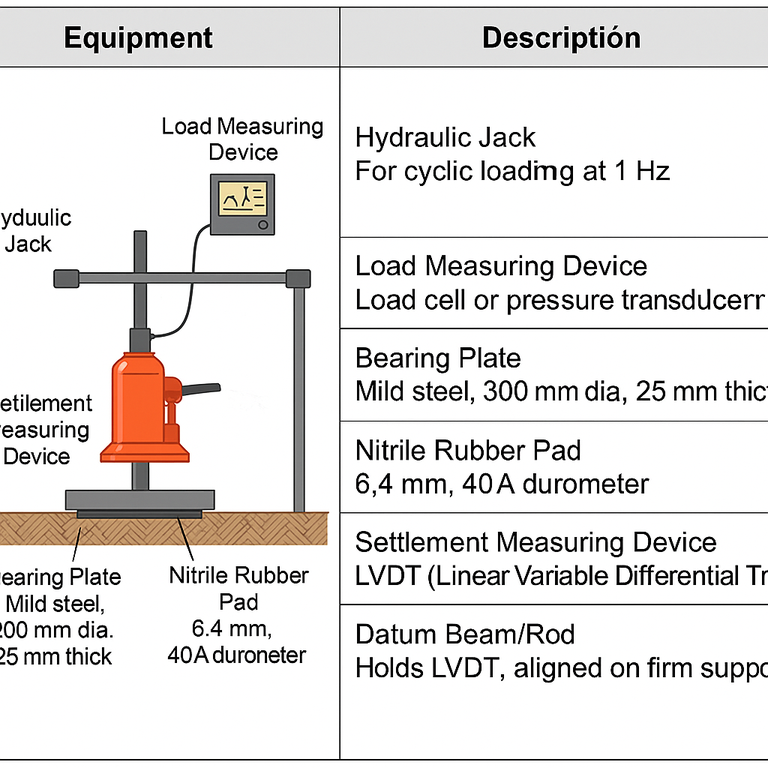
The Cyclic Plate Load Test (CPLT) is a field performance test designed to assess the structural performance and improvement due to geosynthetic reinforcement in pavement layers.
Further details available on our website.
Price and specifications mentioned here are subject to change as per theapplication, customer requirements and prevailing market conditions. Pleaserefer to us for the final rates and offer.
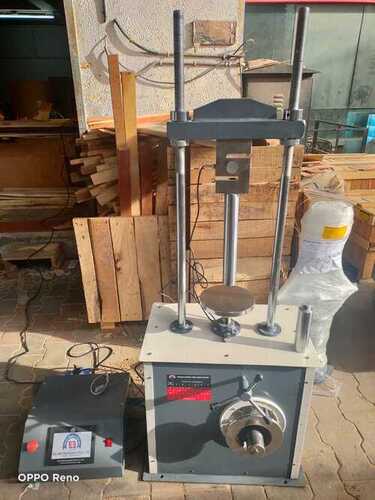
Advanced Load Measurement and Data LoggingThis apparatus integrates a precision strain gauge type load cell for accurate force measurement and a microprocessor-based data logger to reliably record test data. The high-resolution digital display ensures clear readouts, while the fast response time (<2 sec) supports real-time monitoring during critical testing phases.
Robust, Portable, and Safe ConstructionEngineered from high-grade steel and finished with anti-corrosive powder coating, the device is designed for rugged field use and offers ease of mobility due to its wheel-mounted configuration. The built-in overload protection feature enhances operational safety, and the sturdy construction adheres to IS standard hardness for consistent performance.
Versatile Applications and Adjustable FeaturesIdeal for geotextile and geomembrane testing, the cyclic plate load test apparatus accommodates a wide range of specimen sizes and types. Its adjustable control modes (automatic/manual) and flexible parameters, such as test speed and width, address diverse testing requirements. The equipment is suitable for exporters, service providers, manufacturers, suppliers, and traders in geotechnical domains.
FAQs of CYCLIC PLATE LOAD TEST:
Q: How is the cyclic plate load test performed using this apparatus?
A: The test is performed by placing the steel test plate on a prepared surface, applying load through the hydraulic jack, and recording data with a microprocessor-based logger. Load is increased cyclically, while displacement is monitored using the digital display. The process can be managed manually or automatically, ensuring precise, repeatable results.
Q: What are the benefits of the precision strain gauge load cell in this equipment?
A: The precision strain gauge load cell provides high accuracy (1%) and fine resolution (0.01 kN), ensuring reliable measurements throughout the test. This accuracy is critical for obtaining consistent and trustworthy results in geotechnical investigations, supporting reliable engineering decisions.
Q: When should I use the cyclic plate load test apparatus?
A: This apparatus is used primarily in geotextile and geomembrane testing projects, whenever there is a need to evaluate bearing capacity, settlement, and performance characteristics of soil or subgrade materials, particularly before construction or infrastructure projects.
Q: Where can this equipment be deployed for testing?
A: The wheel-mounted, portable design allows deployment both in laboratories and field test sites. Its robust, anti-corrosive construction ensures reliable performance in diverse environmental conditions across varied geotechnical projects.
Q: What is the process for setting up the cyclic plate load test apparatus?
A: To set up the apparatus, position the steel plate on the test area, connect the hydraulic jack and hand pump, and interface the load cell with the digital data logger. Adjust test parameters using easy-to-access controls, and initiate data acquisition. The process is streamlined, requiring minimal tools and straightforward calibration.
Q: How does the overload protection feature enhance safety?
A: The integrated overload protection system automatically limits loads beyond safe operating thresholds, safeguarding both the equipment and operator from accidental overloading and potential mechanical failure during testing.
Q: What advantages does the microprocessor-based data logger offer?
A: The microprocessor-based data logger enables automated, high-speed data collection with digital accuracy. It supports real-time analysis and offers convenient PC connectivity through an optional RS232 or USB interface, ensuring data can be stored, transferred, and analyzed efficiently.
 Call Us : 08045477242









 Send Inquiry

 Send Inquiry
 Send Inquiry
 Send SMS
 Call Me Free