 Call Us : 08045477242


|
Applications
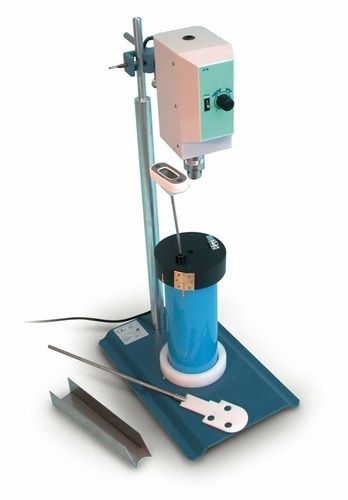
Used for determining the reactivity on slaking of ground quicklime.
Details of apparatus
1) Mechanical Stirrer: Speed of 50 to 500Revolution per Minute. Fitted with a special stainless stirring rod, the end of which is formed into a loop to follow the contour of the reaction container. Power supply 230 volts, 50 Hz, Single Phase, AC Supply.
Furtherdetails available on our website.
The Price mentioned here are subject to change as per the capacity,specifications and application of the user.

Price:
Price 275000 INR / Piece
Minimum Order Quantity : 1 Piece
Features : Corrosion resistant
Automation Grade : Automatic
Usage : laboratory
Application : Industrial
Minimum Order Quantity : 1 Piece
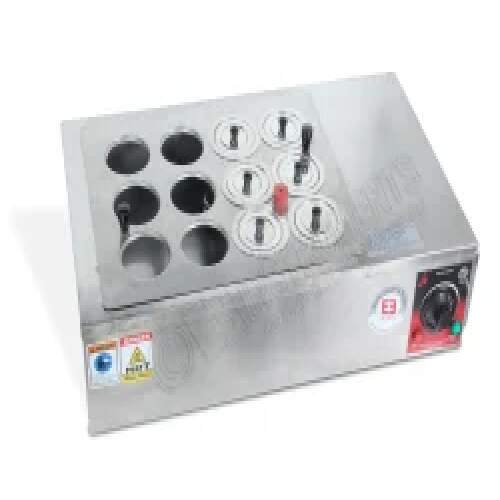
Features : Stainless steel chamber, uniform heating, corrosion resistant
Automation Grade : SemiAutomatic
Usage : Textile Laboratories, Research Institutes
Application : Textile dyeing, Lab sample dyeing
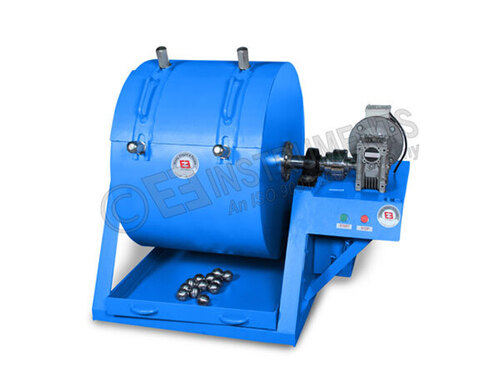
Minimum Order Quantity : 1 Piece
Features : Accurate results, Robust construction, Efficient working
Automation Grade : Semi Automatic
Usage : Laboratory
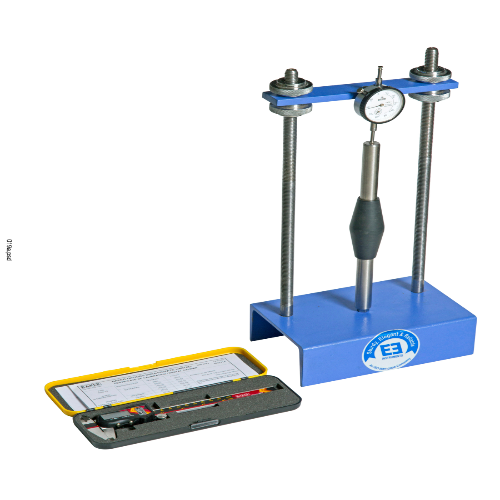
Minimum Order Quantity : 1 Piece
Features : Accurate results, Robust construction, Efficient working
Automation Grade : Semi Automatic
Usage : Cement Testing Equipment
Application : To measure length change in hardened cement paste, mortar and concrete, using a suitable micrometer.

 |
EIE INSTRUMENTS PVT. LTD.
All Rights Reserved.(Terms of Use) Developed and Managed by Infocom Network Private Limited. |




 Send Inquiry

 Send Inquiry
 Send Inquiry
 Send SMS
 Call Me Free