DETERMINATION OF RESISTANCE TO ABRASION About
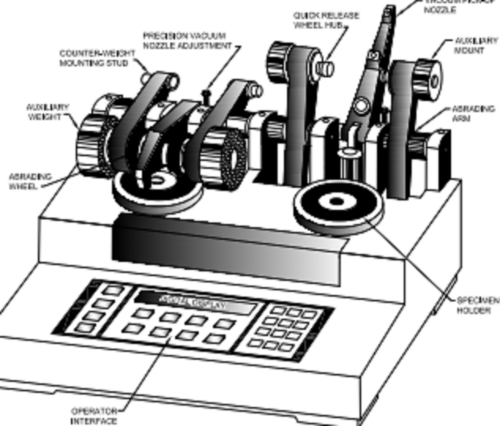
Double head Abrader as shown inFig. 4 and Fig. 5 of IS 17190 or equivalent model with roller wheels, supplementary weights,vacuum suction portion, cleaner brush, screw driver for specimen platform.
- Two modes : Refacing mode and testing mode
- Testing speed : 60 RPM
- No. of abrasion cycles : 300
Purpose-Built for Abrasion TestingEngineered specifically for testing resistance to abrasion, this machine fulfills strict compliance with IS 17190-2020 standards. Its sturdy stainless steel construction and automated precision clamps ensure repeatable, accurate results for laboratory and industrial applications. The user-friendly touch panel streamlines process control, while its polished finish and durable build ensure longevity and reliability in continuous testing environments.
Automatic Operation with Advanced ControlsEnjoy seamless operation with fully automatic controls and a responsive digital display. The equipment handles two test specimens simultaneously, offering a high degree of repeatability and ease of use. With a resolution and accuracy of 1 cycle, results are immediate and easy to interpret. Its automation minimizes manual intervention, boosting productivity in quality control and R&D laboratories.
FAQs of DETERMINATION OF RESISTANCE TO ABRASION:
Q: How is the resistance to abrasion measured using this equipment?
A: Resistance to abrasion is measured by mounting specimens using precision clamps and subjecting them to a controlled abrasive action with a standard emery sheet. The equipment tracks the number of abrasion cycles (up to 99,999), with results displayed digitally for precise analysis as per IS 17190-2020.
Q: What are the benefits of using an automatic, touch-panel interface for abrasion testing?
A: The automatic touch-panel interface allows for quick test setup, immediate cycle readings, and easy adjustment of parameters. This streamlines the testing process, reduces operator errors, and improves workflow efficiency in laboratory and industrial settings.
Q: When should this abrasion resistance tester be used?
A: This equipment should be used whenever standardized, repeatable assessment of material durability against abrasive wear is required, especially during quality control, R&D, or product development of coatings, fabrics, or surface treatments.
Q: Where is the ideal installation location for the abrasion resistance machine?
A: The machine is designed for laboratory bench-top installation in controlled environments, such as quality assurance labs, research institutions, or industrial testing facilities, where stable power, temperature, and humidity conditions are maintained.
Q: What is the standard process for conducting an abrasion resistance test on this machine?
A: The process begins by preparing two 25 x 25 mm specimens, securing them in the precision clamps, and setting up the test parameters via the touch panel. The machine then automatically performs abrasion cycles at a speed of 60 cycles/min across a 25 mm width, recording results until the preset number of cycles or failure endpoint is reached.
Q: How does this equipment ensure accurate and reliable test results?
A: Accuracy is ensured with automatic digital control, an immediate response system, 1 cycle measurement precision, and consistent test environments. The robust, corrosion-resistant stainless steel build reduces variability, guaranteeing reliable data across repeated tests.
Q: What are the key advantages of this model for users in India?
A: As an Indian exporter, manufacturer, and supplier, this equipment meets national standards (IS 17190-2020), features a main power supply compatibility (220-240V, 50Hz), and offers reliable service across Indian labs and industries. Its automated, user-centric design enhances productivity and minimizes maintenance requirements.
 Call Us : 08045477242









 Send Inquiry

 Send Inquiry
 Send Inquiry
 Send SMS