Flexural Testing Machine for Concrete - Digital About
Compliance with following International Standards:
As per IS: 516, IS: 9399, BS: 1881, ASTM C78
Construction Details:
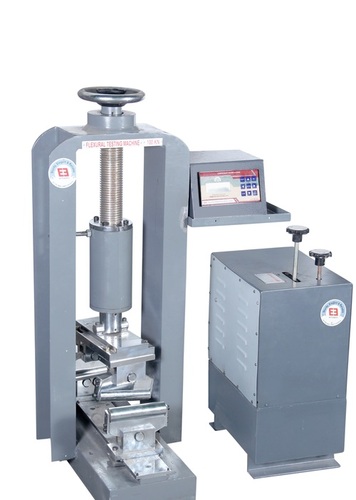
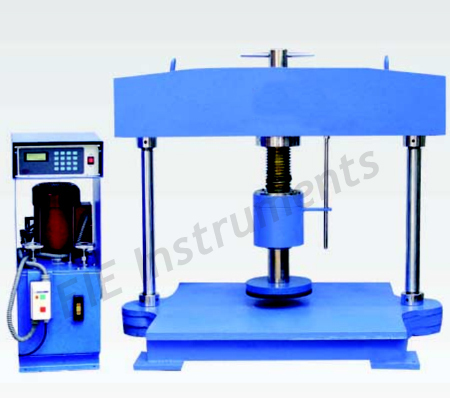
- 100 kN Capacity flexural machine with Digital Load Indicator cum controller
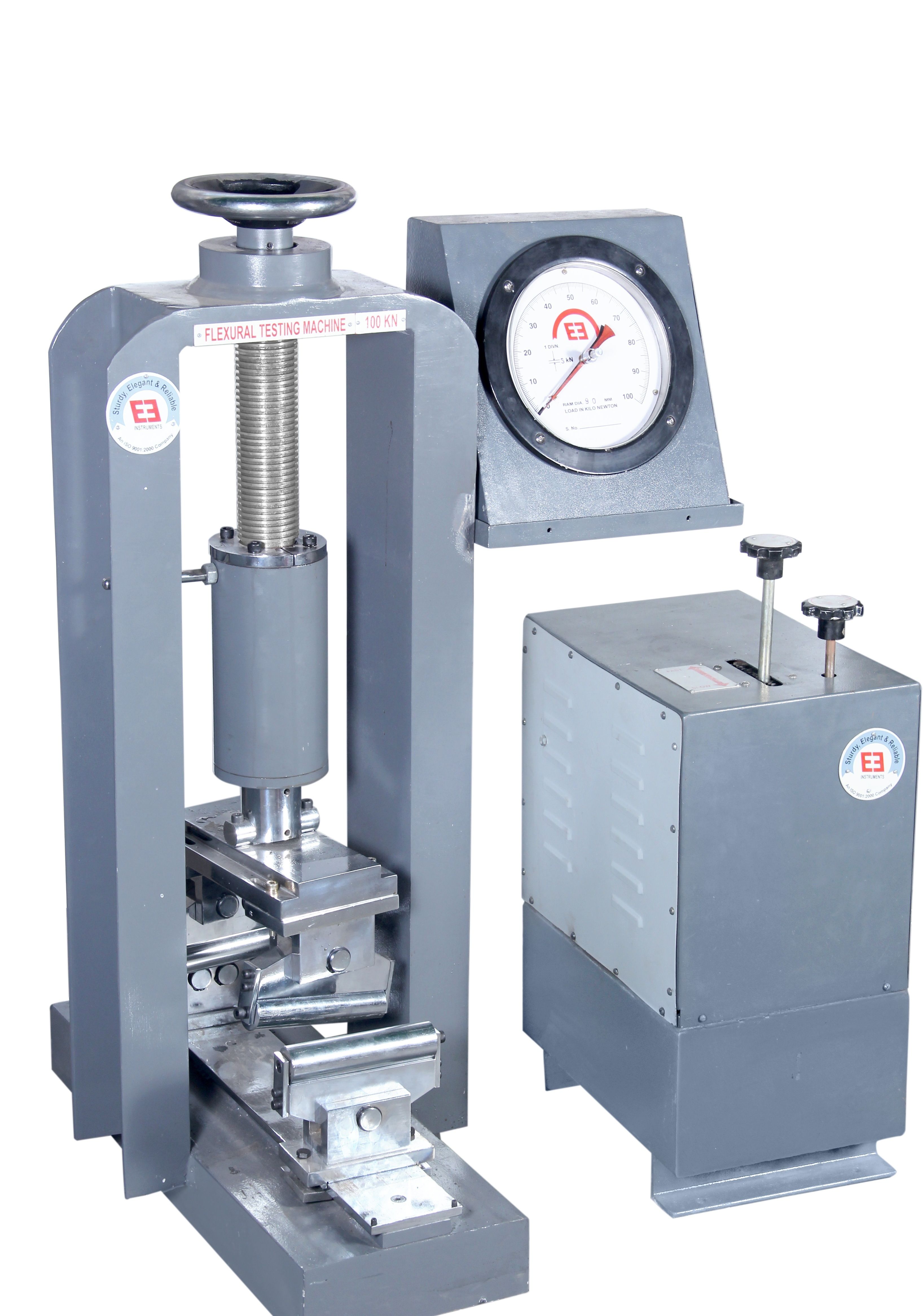
- The machine consists of a motorized load frame.
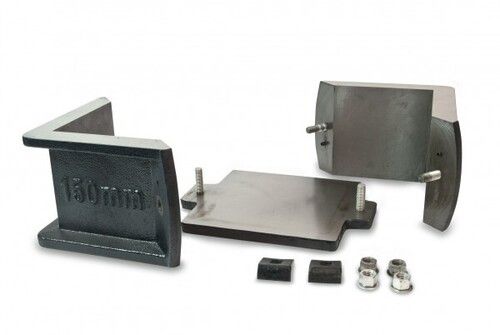
- The lower platen has two rollers, the distance between which is adjustable.
- For 150 mm x 150 mm x 700 mm beam, the center distance between the rollers is 600 mm, while it is 400 mm for beamsof size 100 mm x 100 mm x 500 mm.
- The upper platen has also a pair of rollers whose distance is adjustable.
- The distance between upper roller is 200 mm center to center,for 150 mm x 150 mm x 700 mm size beam and 133 mm for 100 mm x 100 mm x 500 mm size beam.
- Microprocessor Based Digital Load Indicator to indicate applied load is fitted in the load frame.
Robust Design and Exceptional AccuracyCrafted from heavy duty powder-coated steel, the Flexural Testing Machine offers durability and corrosion resistance, ensuring reliable long-term operation in laboratory conditions. The high-precision load cell and digital LCD display deliver accurate measurements with a resolution of 0.01 kN, instantly capturing test results. Engineered for ease of maintenance, the design facilitates quick servicing and calibration, making it suitable for high-throughput testing environments.
User-Friendly Automation and Data ManagementWith a semi-automatic control system and digital readout, this machine streamlines the flexural testing process. Automated data logging and analysis software help researchers efficiently manage test data. Internal memory and PC connectivity (USB/RS232) allow for seamless data transfer and storage, enhancing workflow productivity. The supplied accessories, manuals, and calibration certificate offer a complete package for immediate use and compliance with international standards.
FAQs of Flexural Testing Machine for Concrete - Digital:
Q: How is the flexural strength test conducted using this machine?
A: The process involves placing the concrete beam specimen (100 mm x 100 mm x 500 mm) on the provided supports and applying a controlled load via loading rollers at a rate of 50 mm/min. The digital electronic control system records the load until specimen failure, with instantaneous display and automated data logging.
Q: What are the benefits of using a digital flexural testing machine for concrete?
A: Digital measurement ensures precise, reliable readings with high contrast, backlit LCD displays and instant response. Automated data logging and PC software improve workflow efficiency and minimize errors, while easy calibration and maintenance support consistent, long-term performance.
Q: When should the machine be recalibrated for optimal accuracy?
A: It is recommended to recalibrate the machine periodically or whenever there are significant changes in ambient conditions or consistent anomalies in results. The product comes supplied with a calibration certificate, aligning with compliance standards such as IS 516 and ASTM C78.
Q: Where should the Flexural Testing Machine be used for best performance?
A: This equipment is designed for indoor laboratory use, functioning optimally in environments with temperatures ranging from 10C to 50C and humidity up to 90% (non-condensing). The corrosion-resistant finish increases resilience in laboratory conditions.
Q: What safety features are included in the machine?
A: For operator safety, the machine incorporates overload protection and an emergency stop function. These features safeguard both the specimen and testing personnel during operation, ensuring controlled testing procedures.
Q: How does data storage and connectivity work with this machine?
A: Testing data are stored internally and can be easily transferred to a PC via USB or RS232 interface. Included analysis software enables systematic reporting and archiving, simplifying post-test evaluation and regulatory documentation.
Q: What is the process for regular maintenance of the equipment?
A: Routine maintenance can be performed through easy-access panels designed for swift servicing. Regular checks of load cells, digital indicators, and mechanical components are advisable to maintain accuracy and longevity of the machine.
 Call Us : 08045477242









 Send Inquiry

 Send Inquiry
 Send Inquiry
 Send SMS