Sand Pouring Cylinder About
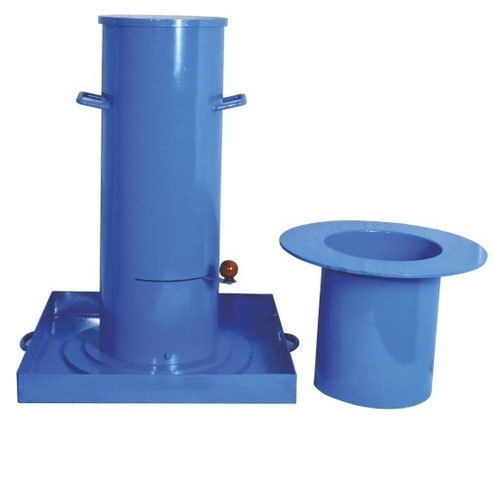
Sand Pouring Cylinder is useful for the in-place determination of variousmaterials. This ensures quick and accurate measuring of the density of base materials. It will deliver the dry density of fine, compact and medium grained soils. The said product is accessible in different specifications so as to run into assorted requirements of the customers.Sand Pouring Cylinder has a rust-proof body and provides outstanding performance in several applications.
Engineered for Precision and DurabilityComposed of high-quality mild steel with a plated finish, the sand pouring cylinder is built to last while resisting corrosion. The standard-compliant design, featuring a 1-liter cylinder and carefully calibrated container, guarantees precise measurement for fine-grained soils. With a sturdily built structure and secure packaging, it is engineered for use under various environmental and laboratory conditions.
Reliable Manual OperationThis equipment functions without the need for electricity or complex displaysit is entirely manually operated, offering instant results through straightforward use. The sand pouring cylinder excels in environments where dependable, hands-on testing is preferred or required, providing high-resolution readings that meet laboratory standards for density analysis.
FAQs of Sand Pouring Cylinder:
Q: How is the Sand Pouring Cylinder used for soil density tests?
A: The Sand Pouring Cylinder is utilized by placing it over a pre-formed hole in fine-grained soil, then manually releasing sand from the cylinder until the hole is filled. The volume of sand used is measured to determine the in-situ soil density as per IS: 2720 (Part XXVIII) standards.
Q: What materials and finish are used in the construction of this equipment?
A: The cylinder and its components are made from mild steel with a corrosion-resistant plated finish, ensuring longevity and suitability for repeated laboratory or field use.
Q: When is this equipment typically used in soil testing?
A: It is used during construction site investigations and laboratory assessments when accurate in-situ density measurements of fine-grained soils are required, especially for quality control and soil characterization.
Q: Where can the Sand Pouring Cylinder be placed during operation?
A: The instrument is designed for flexibility and can be mounted on a bench within a laboratory setting or placed directly on the ground, depending on the needs of the test.
Q: What is the process for operating the sand pouring cylinder?
A: Operation involves positioning the cylinder, releasing sand into the calibrating container or soil cavity, manually reading the measurement, and calculating density using the known volume of sand and the weight used.
Q: Why is manual operation considered beneficial for this equipment?
A: Manual operation enhances user control, reduces dependency on electrical components, and enables instantaneous results, making the device ideal for field and laboratory use where power sources or electronics might not be available.
Q: What are the benefits of this sand pouring cylinder for civil engineering projects?
A: It provides high measurement accuracy, is robust and corrosion-resistant for longevity, meets stringent testing standards, and delivers reliable density data essential for foundation analysis and soil characterization in civil engineering applications.
 Call Us : 08045477242









 Send Inquiry

 Send Inquiry
 Send Inquiry
 Send SMS