Pressure Aging Vessel - ASTM D6521-13 About
Application :
- This system is designed and made as per industrial standards T 0630-2011, Accelerated Aging Test for Bitumen by Pressure Aging Vessel in JTG E20-2011, Standard Test Methods of Bitumen and Bituminous Mixtures for Highway Engineering and SH/T 0774-2005 Standard practice for accelerated aging of asphalt binder using a pressurized aging vessel (PAV).
- It also refers to standards ASTM D6521 and AASHTO PPI.
- It covers the accelerated aging (oxidation) of asphalt binders by means of pressurized air and elevated temperature.
Characteristics :
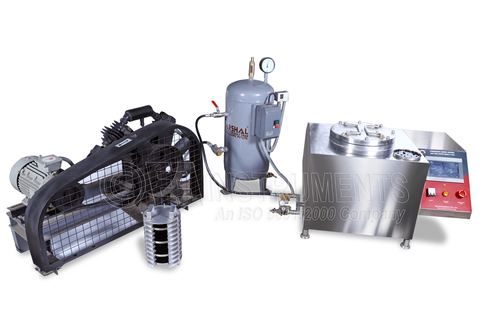
- This system is composed of PAV pressuring aging vessel.
- This system is equipped with a PC. The high pressure aging test is controlled by a PC. All test procedures can be controlled by a PC.
Optional Accessories at Extra Cost :
3 HP Air Compressor with 50 Ltr. Tank @ Rs.65,000.00
Note : Price will be change as per specification
Product details
| Material | Galvanized Iron |
| Model Name/Number | EIE-PAV |
| Voltage | 220-240V |
| Power Source Type | Electric |
| Frequency | 50-60 Hz |
| Brand | EIE |
| Capacity | 100-500 L |
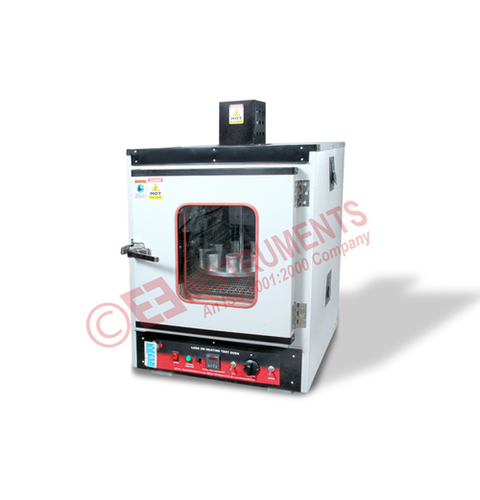
Advanced Asphalt Binder TestingThis pressure aging vessel is designed specifically to emulate long-term aging in asphalt binders, providing essential insight into pavement performance over time. By applying controlled thermal and pressure conditions, laboratories can predict asphalt durability, ensuring compliance with international standards. The device supports repeatable, accurate testing, critical for quality control in road construction and maintenance projects.
High-Safety, User-Friendly DesignEquipped with an overpressure safety feature, overtemperature cutoff, and a tempered glass observation window, the unit prioritizes operator safety while enabling real-time monitoring. The touch pad control and digital microprocessor facilitate straightforward operation, while the automatic controls enable consistent results with minimal user intervention. Its robust stainless steel build supports demanding laboratory environments.
FAQs of Pressure Aging Vessel - ASTM D6521-13:
Q: How does the Pressure Aging Vessel simulate long-term aging of asphalt binders?
A: This equipment utilizes elevated pressure (2.1 MPa) and temperatures (between 90C to 110C) to replicate the oxidative aging process that asphalt binders endure over time. This is in accordance with ASTM D6521-13, providing reliable predictions of pavement longevity in laboratory settings.
Q: What safety features are included in the Pressure Aging Vessel?
A: Safety is integrated through automatic overpressure protection, overtemperature cutoff, and a safety alarm system. The tempered glass observation window allows safe process inspection, while digital controls further mitigate operational risks.
Q: When should a Pressure Aging Vessel be used?
A: It is employed during the testing phase of asphalt binder analysis, especially when evaluating materials for road construction where long-term performance prediction is required. The unit is primarily used after initial binder tests, to assess durability under simulated aging conditions.
Q: Where is the Pressure Aging Vessel most appropriately installed and operated?
A: This testing equipment is designed for indoor laboratory use, suitable for asphalt testing labs in research institutions, construction companies, or quality control departments due to its precision and environmental requirements.
Q: What is the process for using this Pressure Aging Vessel?
A: Asphalt binder samples are placed inside the corrosion-resistant chamber, and operators use the touch pad control to set desired parameters. The digital microprocessor maintains preset pressure, temperature, and timing (up to 99 hours), automatically regulating the process and ensuring consistent aging simulation.
Q: What are the benefits of using a digital microprocessor-based control system?
A: A digital microprocessor enables precise, real-time control over testing parameters, ensuring highly accurate aging simulations and reproducible results. It also simplifies operation through automatic management and digital LED displays, reducing operator error.
 Call Us : 08045477242









 Send Inquiry

 Send Inquiry
 Send Inquiry
 Send SMS
 Call Me Free