 Call Us : 08045477242


|
A piece of scientific apparatus known as a laboratory sand bath is used to indirectly heat or maintain the temperature of apparatus or materials. For heating and maintaining the temperature of reaction vessels, round-bottom flasks, distillation apparatus, and other glassware in chemical labs, sand baths are frequently employed. When working with temperature-sensitive reactions or when exact temperature control is necessary, they are very helpful. Laboratory sand baths are used in analytical chemistry to prepare samples for testing, for as by drying samples at specific temperatures or evaporating solvents. For processes like rotary evaporation, they are crucial.
Double walled, inside stainless steel, outside mild steel powder coated, Heated by open type heaters placed at the bottom of the inner chamber. Controlled by energy regulator , Working on 230 V single phase.
Applications :
1.A sand bath is a common piece of laboratory equipment made from a container filled with heated sand. It is used to provide even heating for another container, most often during a chemical reaction.
Also available in various size such as : 30 x 20 x 10 CM and 40 x 28 x 10 CM
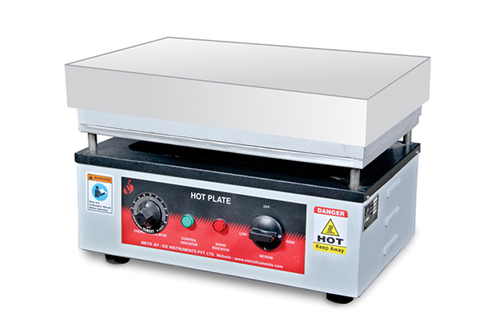


Price:
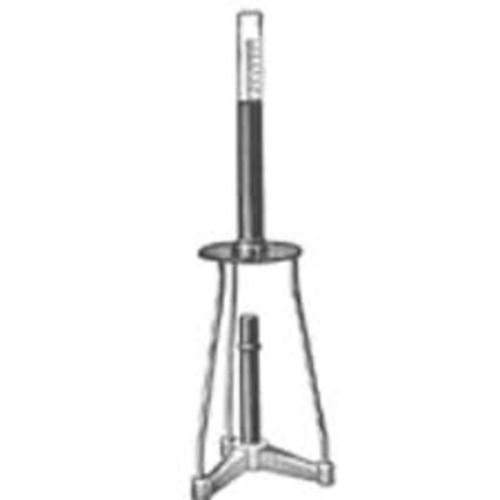
Price 10500.00 INR / Piece
Minimum Order Quantity : 1 Piece
Power Supply : Not Required (Candle Powered)
Power : Manual (No Electrical Power Required)
Usage : General Laboratory Testing Equipment
Product Type : JACKSON TURBIDIMETER
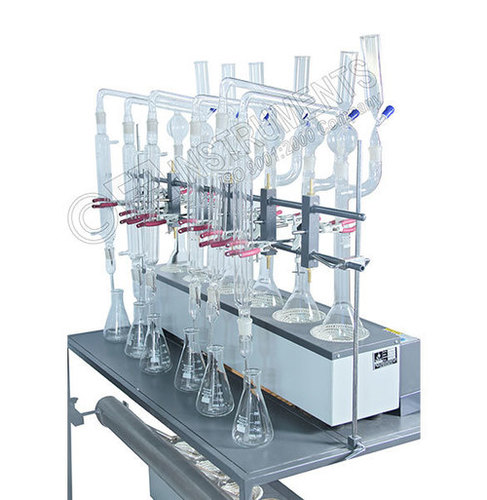
Minimum Order Quantity : 1 Piece
Power Supply : 230 volt, 50HZ, Single Phase AC Supply
Power : 100 Watt (w)
Usage : Laboratory
Product Type : Kjeldahl Digestion Unit
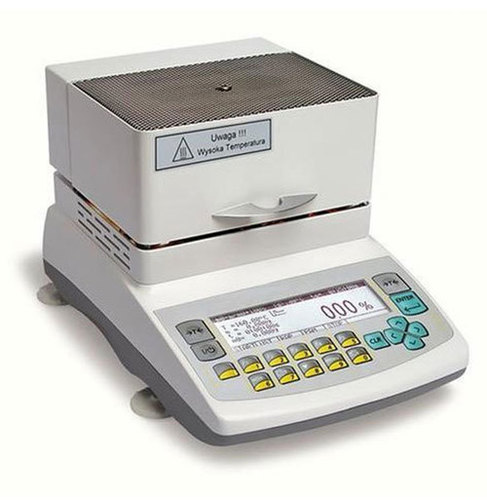
Minimum Order Quantity : 1 Piece
Power Supply : 230 volt,50HZ, Single Phase, AC Supply
Power : 100 Watt (w)
Usage : Industrial
Product Type : Infrared Moisture Balance
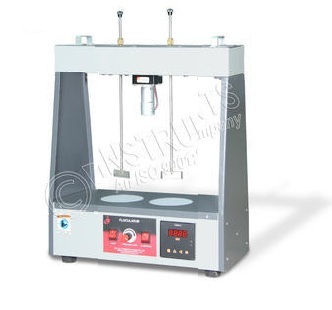
Minimum Order Quantity : 1 Piece
Power Supply : 230 volt, 50 Hz, Single Phase Ac Supply
Power : 100 Watt (w)
Usage : Industrial
Product Type : Flocculator

 |
EIE INSTRUMENTS PVT. LTD.
All Rights Reserved.(Terms of Use) Developed and Managed by Infocom Network Private Limited. |




 Send Inquiry

 Send Inquiry
 Send Inquiry
 Send SMS
 Call Me Free