JACKSON TURBIDIMETER About
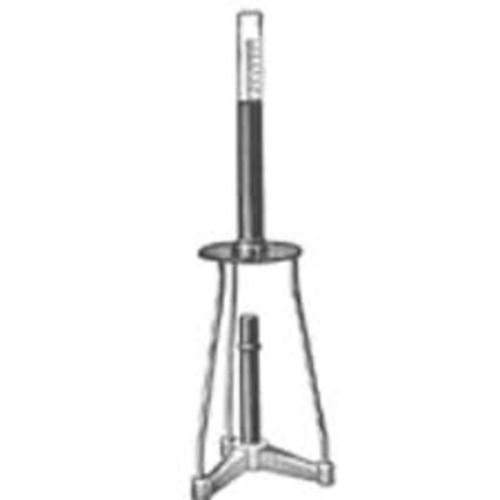
The standard method for the determination of turbidity has been based on the Jackson Candle turbidity meter. Turbidity measurements by the candle turbidity meter are based on the light path through a suspension, which just causes the image of the flame of a standard candle to disappear, that is, to become in indistinguishable against the general background illumination when the flame is viewed through the suspension. The longer the light path, the lower the turbidity
Furtherdetails available on our website.
The Price mentioned here are subject to change as per the capacity,specifications and application of the user.
Reliable Turbidity MeasurementThe Jackson Turbidimeter is renowned for delivering dependable turbidity assessments in the laboratory. Its design, which includes a sturdy metal body and a durable borosilicate glass tube with marked graduations, ensures consistent and accurate readings. With a measurement range spanning 01000 Jackson Turbidity Units, this instrument remains a standard for water quality analysis and other laboratory applications.
Portable and Energy IndependentThis turbidimeter does not require an external power source or batteries. It operates using a standard candle as the light source, making it conveniently portable and usable in varying laboratory settings. The lightweight construction, along with a protective carrying case, makes on-site and field testing simple and reliable without compromising measurement integrity.
User-Friendly OperationWith its manual, visual scale and clearly marked graduations, the Jackson Turbidimeter simplifies the turbidity determination process. Its straightforward design allows laboratory technicians and field scientists to quickly learn its operation, yielding accurate and repeatable results through simple visual observation, even in locations with limited technological infrastructure.
FAQs of JACKSON TURBIDIMETER:
Q: How does the Jackson Turbidimeter measure turbidity?
A: The Jackson Turbidimeter measures turbidity using a visual method where a standard candle is placed as the light source beneath a marked borosilicate glass tube. The user observes the disappearance of the candles image through the sample, noting the corresponding graduation to determine turbidity in Jackson Turbidity Units (JTU).
Q: What is the process for using the Jackson Turbidimeter?
A: To use the turbidimeter, fill the glass tube with your sample, light the standard candle beneath the tube, and visually observe from the top. Gradually remove water until the candles image becomes visible. The graduation marked at the water level gives the turbidity reading.
Q: When should this instrument be used over electronic turbidity meters?
A: The Jackson Turbidimeter is ideal for laboratories or field locations where electricity is unavailable or limited. It is also preferred for standardization purposes or when following established manual visual methods for water quality analysis.
Q: Where is the Jackson Turbidimeter commonly applied?
A: This device is widely employed in water treatment plants, environmental research, educational laboratories, and field testing in various locations across India, especially where electricity supply may be unreliable.
Q: What benefits does the Jackson Turbidimeter offer?
A: Key benefits include its portability, no need for electrical power, high accuracy (1% of full scale), simple operation, and rugged construction for reliable field and laboratory use. It provides a cost-effective and standardized approach for turbidity determination.
Q: How accurate are the readings from this turbidimeter?
A: The device is accurate to within 1% of the full-scale range, making it suitable for reliable and repeatable turbidity measurements in laboratory conditions.
Q: What types of samples can be tested with this equipment?
A: The Jackson Turbidimeter is suitable for analyzing any liquid sample where turbidity measurement is required, including raw water, treated water, and various laboratory solutions.
 Call Us : 08045477242












 Send Inquiry

 Send Inquiry
 Send Inquiry
 Send SMS