Compaction Factor Apparatus About
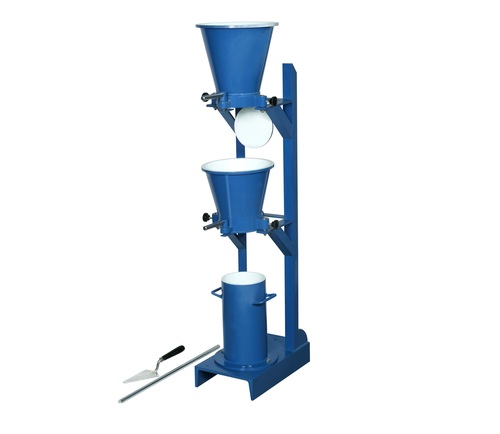
The apparatus consist of two conical hoppers and a cylinder, mounted on a rigid metal frame. The lower openings of the hoppers are fitted with hinged trap doors for release and during the fall of the material.
Applications:
Compaction factor is the ratio of the weight of partially compacted concrete to the weight of the concrete when fully compacted in the same mould. The weight of partially compacted concrete in relation to its fully compacted state is a reasonably good indication of the workability of concrete.
Further details availableon our website.
The Price mentioned here are subject to change as per the capacity,specifications and application of the user.
Robust Construction and DurabilityBuilt with mild steel or cast iron main body, hoppers, and cylinder, the Compaction Factor Apparatus is designed for long-term reliability. Powder-coated or painted surfaces provide excellent protection against rust, making it suitable for repetitive use in varied laboratory environments. Its sturdy build ensures minimal maintenance and high durability during concrete testing.
Comprehensive Accessories for Concrete TestingSupplied complete with a tamping rod, cylindrical test container, and receiving vessel, the apparatus facilitates straightforward, accurate measurement of compaction factor in concrete samples. All components meet international standardsIS:1199, BS:1881, and ASTM C567ensuring reliability and consistency in results across different laboratory protocols.
Efficient Manual Operation and Easy HandlingThe system features top and bottom hoppers, easily operated by quick-release mechanisms. Despite its approximate weight of 35 kg, its ergonomic design and portable mount make it convenient for concrete laboratories and field applications. Manual control means no power supply is necessary, allowing immediate tests under standard laboratory conditions.
FAQs of Compaction Factor Apparatus:
Q: How does the Compaction Factor Apparatus measure concrete workability?
A: The apparatus evaluates workability by comparing the weight of partially compacted concrete with the weight of fully compacted concrete within a standardized mould. This ratio, known as the compaction factor, helps assess the suitability and consistency of concrete mixes.
Q: What materials are used in the construction of the apparatus, and how does this benefit users?
A: The main body, hoppers, and cylinder are constructed from mild steel or cast iron, coated with powder or paint to resist rust. This robust construction enhances durability, provides corrosion resistance, and ensures longevity for repeated laboratory use.
Q: When should concrete samples be tested with this apparatus?
A: Testing should be done when you need to evaluate the workability of concrete, especially for normal mixes under standard laboratory conditions. Following specified standards (IS:1199, BS:1881, ASTM C567) guarantees valid measurement results.
Q: Where is the Compaction Factor Apparatus typically used?
A: It is widely used in concrete and civil engineering laboratories, construction material testing facilities, and research centres requiring precise assessment of concrete workability.
Q: What is the process for executing a compaction factor test using this device?
A: Fill the top hopper with fresh concrete, release it into the bottom hopper via the trap door, then into the receiving container. Weigh both the partially and fully compacted concrete to calculate the compaction factor using an independent weighing balance (not included).
Q: How is portability and installation addressed in this equipment?
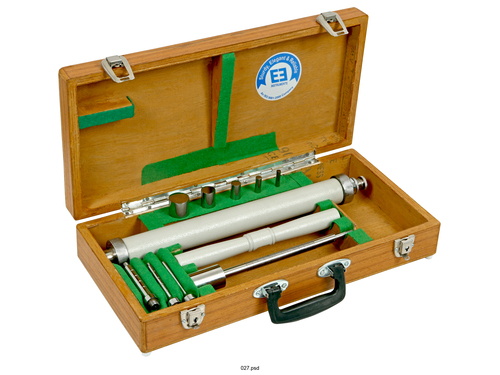
A: The apparatus is free-standing and portable, with compact dimensions (280 x 360 x 1320 mm). It is packed in an export-worthy wooden box for safe transport, ensuring easy installation in various laboratory settings.
Q: What benefits does this apparatus offer over other concrete test methods?
A: It delivers highly repeatable results and adheres to multiple international standards. The manual operation allows immediate, power-free testing, and the corrosion-resistant design ensures reliability, ease of cleaning, and low ongoing maintenance.
 Call Us : 08045477242









 Send Inquiry

 Send Inquiry
 Send Inquiry
 Send SMS
 Call Me Free