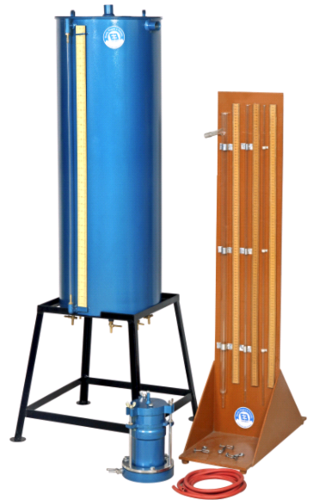
Soil Permeability Apparatus About
Purpose:
To study the permeability characteristics of all type of soil samples For both Re molded as well as undisturbed specimen under different conditions of Laboratory as well as in the field.
Further details availableon our website.
The Price mentioned here are subject to change as per the capacity,specifications and application of the user.
Precision and Versatility for Soil TestingEngineered for exceptional accuracy, the Soil Permeability Apparatus meets the rigorous requirements of laboratory soil analysis. With a measuring range spanning coefficients from 10 to 10 cm/s, it enables detailed characterization of soil hydraulic properties. Transparent construction and analog graduated scale ensure clear visibility and reliable results every time.
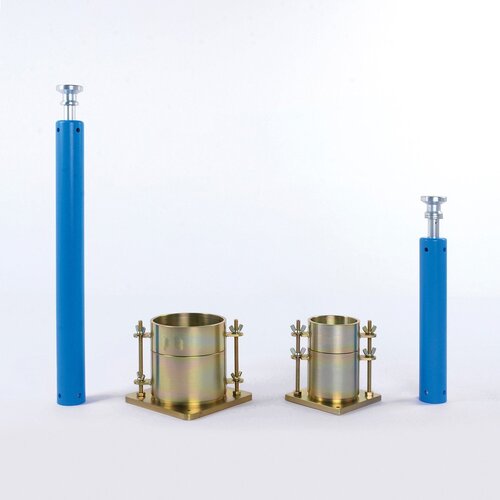
Easy Specimen Preparation and OperationThis apparatus includes all necessary accessories for specimen preparationrubber stoppers, filter papers, and porous stonesstreamlining setup for both constant and falling head tests. Manual controls allow users to adjust fluid flow rates and tailor testing speeds, while efficient quick-release clamps and water-tight seals enhance user safety and convenience.
Robust, Manual Construction for Reliable ResultsBuilt with powder-coated steel base plates and impact-resistant polycarbonate/acrylic cylinders, the device is designed for durability and longevity. Operating on a gravity/fall head principle, it requires no external electrical power, making it ideal for various laboratory environments and adaptable across humidity and temperature ranges.
FAQs of Soil Permeability Apparatus:
Q: How is a soil sample prepared for testing in the Soil Permeability Apparatus?
A: Specimen preparation is straightforward using the included accessories: rubber stoppers, filter papers, and porous stones. Securely place the soil sample inside the cylinder and seal with stoppers and filter paper to prevent leaks, ensuring accurate permeability measurements.
Q: What types of test methods can be performed using this apparatus?
A: The device supports both constant head and falling head permeability tests, allowing users to study fluid movement through various soil textures and determine permeability coefficients under different conditions.
Q: When should the quick-drain valve be used during testing?
A: The integrated quick-drain valve is utilized at the end of a test run to efficiently release water from the cylinder and standpipe, making post-test sample removal and cleanup faster and minimizing downtime between procedures.
Q: Where is the Soil Permeability Apparatus typically utilized?
A: This apparatus is designed for laboratory use and is commonly found in geotechnical, civil engineering, and research facilities requiring precise soil permeability analysis. Its bench-top mounting and manual operation suit diverse soil testing applications.
Q: What benefits does the apparatuss graduated borosilicate standpipe offer?
A: The clear, graduated borosilicate glass standpipe provides immediate, precise analog readings down to 0.01 ml resolution, enhancing measurement accuracy and making interpretation straightforward for both constant and falling head tests.
Q: How is the fluid flow rate controlled during a test?
A: Fluid flow rate is manually adjusted via control valves, allowing operators to set the desired speed based on the testing method and soil type. This ensures optimal measurement conditions for accurate permeability results.
Q: What is the main advantage of the corrosion-resistant construction?
A: Corrosion-resistant materials such as powder-coated steel and high-impact polycarbonate/acrylic ensure long-term durability, maintain measurement integrity, and protect the apparatus from environmental factors, supporting reliable operation even in variable humidity and temperature ranges.
 Call Us : 08045477242










 Send Inquiry

 Send Inquiry
 Send Inquiry
 Send SMS