SAND EQUIVALENT VALUE TEST APPARATUS About
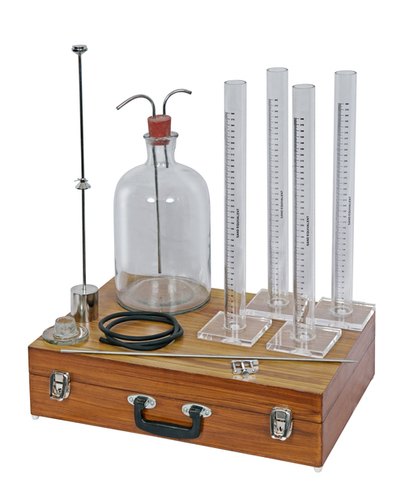
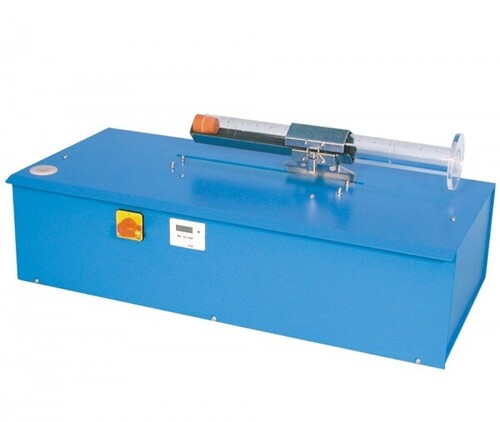
4 Nos. Transparent Acrylic Plastic Cylinders with square base cylinders, Graduated from base 380mm in 1 mm divisions.
- 2 NosRubber stoppers for above.
- 1 NoS.S. Irrigator tube.
- 1 NoSiphon assembly.
- 1 NoWeighted foot assembly.
Further details availableon our website.
The Price mentioned here are subject to change as per the capacity,specifications and application of the user.
Precision in Soil and Aggregate TestingOur Sand Equivalent Value Test Apparatus delivers consistent and accurate measurements for evaluating the cleanliness and quality of fine aggregates in construction materials. Built to ASTM D2419 and AASHTO T176 standards, its a trusted solution for laboratories, research centers, and quality control departments.
Robust Construction and Easy OperationCrafted from robust borosilicate glass and equipped with corrosion-resistant fittings, the device assures long service life. Its manual controls and bench-top design ensure straightforward operation, requiring no external power source. This makes it adaptable to diverse working environments with recommended conditions between 5C and 40C.
Comprehensive Accessory Kit for Complete TestingEvery unit comes with a complete set of accessories including a graduated cylinder, siphon assembly, measuring can, and irrigator tube. This allows users to perform sand equivalent tests on one specimen at a time with minimal setup and immediate response times.
FAQs of SAND EQUIVALENT VALUE TEST APPARATUS:
Q: How is the Sand Equivalent Value Test Apparatus used in soil testing?
A: To use the apparatus, a well-mixed soil or fine aggregate sample is placed into the graduated cylinder, water and solution are added, and the mixture is agitated using the manual weighted foot. The sedimentation process is then visually monitored on the graduated scale to determine the sand equivalent value.
Q: What materials and standards does the apparatus comply with?
A: The apparatus is made from high-quality borosilicate glass and corrosion-resistant fittings for durability and accuracy. It conforms to ASTM D2419 and AASHTO T176 standards for sand equivalent testing of fine aggregates.
Q: When should the sand equivalent value test be performed?
A: The test is typically conducted during the quality control stage of aggregate production or prior to using aggregates in construction projects. It helps assess the cleanliness and usability of the material for concrete and road construction.
Q: Where can this equipment be used?
A: The test apparatus is suitable for laboratory settings in construction, civil engineering, and educational institutions. Its manual, bench-top design and lack of power supply requirements allow it to be used in locations with limited access to electricity.
Q: What is the process of measuring the sand equivalent value?
A: After preparing the soil sample and adding it to the graduated cylinder, the sample is agitated vertically with the weighted foot for the specified stroke. The mixture is then allowed to settle for a defined period, and the readings are taken from the graduated scale to calculate the sand equivalent value.
Q: What are the benefits of using this sand equivalent test apparatus?
A: The apparatus provides a rapid, reliable means for determining the relative proportion of sand to clay or fine dust in soil or aggregates, helping to ensure high-quality construction materials, meet project specifications, and avoid material failures.
 Call Us : 08045477242









 Send Inquiry

 Send Inquiry
 Send Inquiry
 Send SMS
 Call Me Free