 Call Us : 08045477242
|
Call Us : 08045477242
|
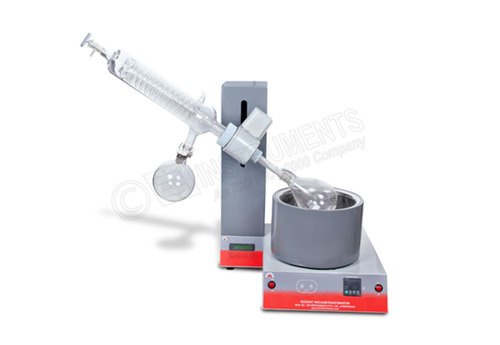
Standard Practice for Recovery of Asphalt Binder from Solution Using the Rotary Evaporator.
Applications
For Recovery of Asphalt Binder from Solution . The solution of bitumen and solvent from a prior extraction is distilled by partially immersing the rotating distillation flask of the rotary evaporator in a heated oil bath. The solution is subjected to a partial vacuum and a flow of nitrogen gas or carbon dioxide gas. These gases provide inert atmosphere to prevent oxidation of the bitumen during the recovery process
Furtherdetails available on our website.
The Price mentioned here are subject to change as per the capacity,specifications and application of the user.

Price:
Minimum Order Quantity : 1 Piece
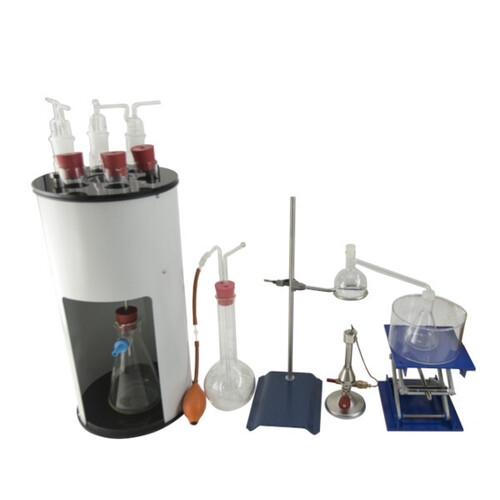
Equipment Materials : Stainless Steel and Borosilicate Glass
Application : Determination of wax content in bitumen and petroleum products
Dimension (L*W*H) : 450 x 350 x 400 mm (approx)
Usage : Apparatus for Determination of WAX CONTENT IN BITUMEN
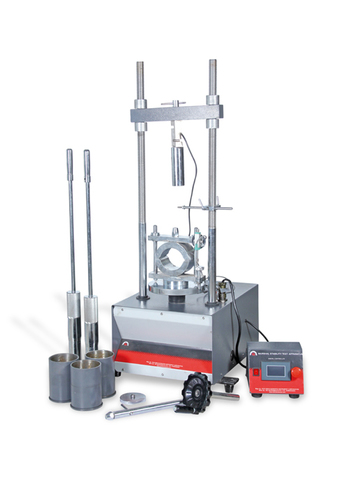
Price 175000.00 INR / Piece
Minimum Order Quantity : 1 Piece
Equipment Materials : Heavyduty mild steel structure with powder coated finish
Application : Testing the stability and flow value of bituminous mixtures
Dimension (L*W*H) : 600 x 400 x 850 mm (approx)
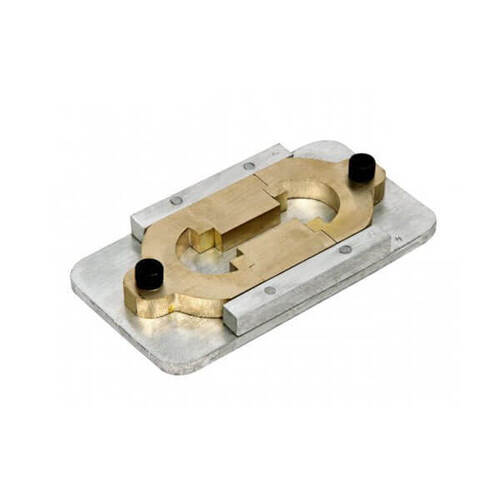
Price 5400.00 INR / Piece
Minimum Order Quantity : 1 Piece
Equipment Materials : Stainless Steel, Brass
Application : Determining elastic recovery of bitumen
Dimension (L*W*H) : Overall Length 470 mm approx (Moulds are 250 x 25 x 25 mm each)
Usage : Bitumen Testing Equipment
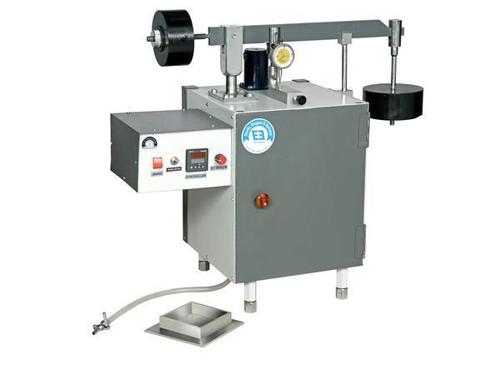
Price 44000.00 INR / Piece
Minimum Order Quantity : 1 Piece
Equipment Materials : Power Coated / Painted / Chrome Plated
Application : Hardness tester for Mastic Asphalt has been fabricated to meet the essential requirements of IS 1195 1968 in finding out the Hardness Number of mastic asphalt.
Dimension (L*W*H) : 860 X 365 X 625 ( L X W X H ) MM
Usage : Bitumen Testing Equipment

 |
EIE INSTRUMENTS PVT. LTD.
All Rights Reserved.(Terms of Use) Developed and Managed by Infocom Network Private Limited. |




 Send Inquiry

 Send Inquiry
 Send Inquiry
 Send SMS
 Call Me Free