OXIDATION STABILITY FOR GREASE TESTING EQUIPMENTS About
Purpose
This test method determines resistance of lubricating greases to oxidation when stored statically in an oxygen atmosphere in a sealed system at an elevated temperature under conditions of test
Summary of test method
The sample of grease is oxidized in a pressure vessel heated to 99 Degree Celsius and filled with oxygen at 110 psi . Pressure is observed and recorded at stated intervals. The degree of oxidation after a given period of time is determined by the corresponding decrease in oxygen pressure
Further details availableon our website.
The Price mentioned here are subject to change as per the capacity,specifications and application of the user.
Advanced Safety and PrecisionOur testing equipment is equipped with essential safety mechanisms including a pressure release valve and over-temperature cut-off, safeguarding both users and specimens during analysis. The PID controller delivers stable temperature regulation up to 150C, while the built-in digital pressure gauge provides accurate measurements with 1 psi accuracy, instilling confidence in every result.
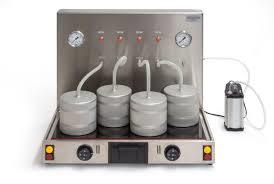
Multi-Sample Capacity and DurabilityConstructed from robust stainless steel, this benchtop instrument supports up to six specimens per test cycle, enhancing productivity and laboratory efficiency. Designed with standard oxygen inlet and outlet ports, the system integrates seamlessly with commercial high-purity oxygen cylinders and supports both manual and digital operation modes.
Versatile Application in Grease EvaluationSpecifically engineered for the petroleum sector, this equipment executes oxidation stability tests under tightly controlled laboratory conditions. Its programmable timer allows test durations of up to 100 hours, ensuring adaptability to diverse research and quality assurance protocols across industry laboratories.
FAQs of OXIDATION STABILITY FOR GREASE TESTING EQUIPMENTS:
Q: How does the Oxidation Stability for Grease Testing Equipment operate?
A: The equipment operates by subjecting grease samples to a controlled oxygen environment within a sealed system at elevated temperatures up to 150C. The process is managed digitally or manually with a built-in heater and precise PID temperature controller, enabling accurate and reproducible test conditions.
Q: What types of greases and samples can be tested with this instrument?
A: This system is designed for standard grease sample pots and can test between one to six specimens simultaneously, making it suitable for a variety of lubricating greases used in petroleum and related industries.
Q: When should this equipment be used in the product testing process?
A: It should be implemented during laboratory evaluation phases where the oxidative stability of lubricating greases needs to be determined under static, oxygen-rich conditions, typically as part of quality assurance or research studies.
Q: Where is this equipment best installed and used?
A: The bench-top design and electrical requirements make it ideal for laboratory environments with standard 230V AC, 50Hz power supply and ambient humidity, ensuring optimal performance and safety.
Q: What safety features are included with the oxidation stability testing equipment?
A: Key safety components comprise a pressure release valve to prevent over-pressurization, an over-temperature cut-off to avoid overheating, and a sealed system that maintains a secure testing environment throughout operation.
Q: How is pressure monitored and controlled during the oxidation stability test?
A: Pressure within the test chamber is monitored using a digital manometer, offering instantaneous readings with 1 psi accuracy and 0.1 psi resolution. The gas pressure is adjustable from 0 to 7 kg/cm, giving users precise control over testing parameters.
Q: What are the main benefits of using this testing equipment?
A: Users benefit from multi-specimen capability, high-precision temperature and pressure control, rapid testing response, robust safety features, and compatibility with standard oxygen cylinders, all contributing to reliable and efficient oxidation stability assessments for lubricating greases.
 Call Us : 08045477242









 Send Inquiry

 Send Inquiry
 Send Inquiry
 Send SMS
 Call Me Free