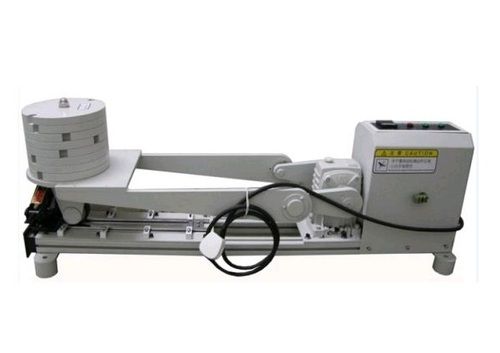
LOAD WHEEL ROLLING TESTER About
Characteristics
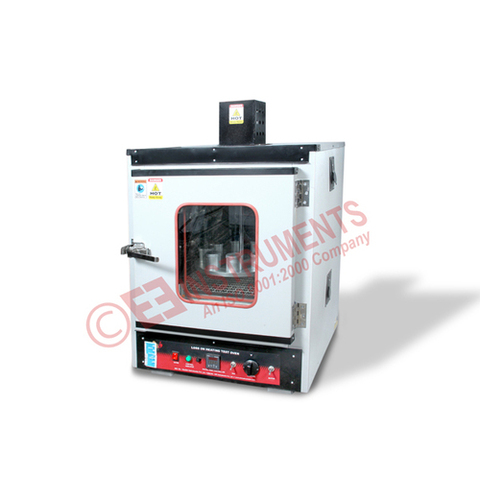
The instrument is in accordance Standard Test Methods for Bitumen and Bituminous Mixtures for Highway Engineering. Slurry mixture load wheel sticky sand test provisions of the design and manufacture of it. Suitable for controlling the upper limit of the amount of asphalt in the slurry mixture, and determining the optimum asphalt content of slurry mixture with wet wheel wear test.
- The instrument is a floor structure, the structure design of the instrument, and test apparatus of the specifications of the size are accord. The design is novel, the structure is stable, and the use is convenient.
Furtherdetails available on our website.
The Price mentioned here are subject to change as per the capacity,specifications and application of the user.
Versatile Wheel Load TestingThis Load Wheel Rolling Tester is engineered to evaluate wheel load and rolling behavior on materials, suitable for diverse applications from industrial castors to material research. Its customizable station configuration enables tailored testing, while the robust drive mechanism ensures consistent and accurate results in compliance with international standards.
Advanced Control and ReportingEquipped with a digital controller and LED display, the tester allows fine-tuning of cycle speed and test duration, with programmable timer functionality. The output of test reports can be easily accessed via digital print or USB export, streamlining documentation and analysis for efficient workflow.
Built for Durability and SafetyConstructed with powder-coated mild steel and precision bearings, the machine offers corrosion resistance and long service life. Safety guards and low noise operation below 70 dB support a secure and comfortable testing environment. Castor wheels with locks provide mobility and stability as needed.
FAQs of LOAD WHEEL ROLLING TESTER:
Q: How does the Load Wheel Rolling Tester operate for material testing?
A: The Load Wheel Rolling Tester uses grooved steel rollers, a worm gear drive mechanism, and a powerful 2 HP motor to simulate rolling loads up to 500 kg on materials or castors. Its adjustable cycle speed and programmable timer function allow users to set precise test durations as required for varied test protocols.
Q: What types of wheels or castors are compatible with the tester?
A: This tester accommodates wheels and castors with a diameter of up to 200 mm. It supports testing on a range of wheel materials and designs, making it suitable for evaluating products in industrial and commercial environments.
Q: When is this equipment typically used during product development or quality control?
A: It is commonly used during the quality assurance stage as well as in research and development, helping manufacturers assess the performance of wheels and castors under repeated loading and rolling conditions as per IS and ASTM standards.
Q: Where can the Load Wheel Rolling Tester be installed for optimal use?
A: The tester is designed for installation in laboratories, manufacturing facilities, or material testing centers. Its mobile base with lockable castor wheels allows easy repositioning while ensuring stability during operation.
Q: What is the process for extracting test reports from the equipment?
A: After completing a test, results are displayed on the LED display and can be exported either through a digital printout or via USB, providing flexibility for documentation and further analysis.
Q: How does the digital controller enhance tester operation and accuracy?
A: The digital controller permits precise adjustment of cycle speed, test duration, and other parameters, achieving accuracy within 1%. This ensures that results reliably reflect material and wheel endurance under controlled testing conditions.
Q: What are the benefits of using this Load Wheel Rolling Tester?
A: Key benefits include reliable performance under heavy loads, strict adherence to international standards, durable construction, accurate and customizable testing cycles, user-friendly digital operation, and streamlined report generation, all of which support improvement in product quality and safety.
 Call Us : 08045477242









 Send Inquiry

 Send Inquiry
 Send Inquiry
 Send SMS