Laboratory Cbr Apparatus - Electric Operated About
Applications :
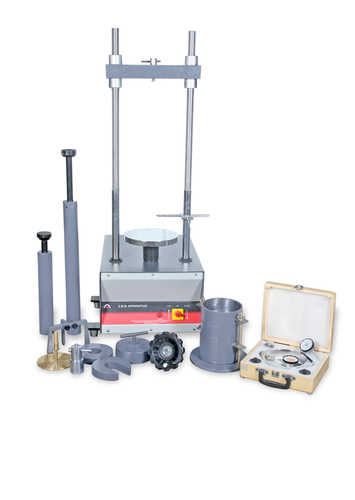
Also known as EIE Motorized California Bearing Ratio Test Apparatus determines the load carrying capacity in the laboratory when in place density and water contents are such that the degree of saturation is 80 % or greater, when material is cohensionless and coarse grained.
Further details availableon our website.
The Price mentioned here are subject to change as per the capacity,specifications and application of the user.
Precision and Reliability in Soil TestingEngineered for accuracy, the Electric Operated CBR Apparatus utilizes a strain-gauge type load cell and a digital load indicator, providing immediate and clear results. Its compliance with IS:2720 (Part XVI) and ASTM D1883 means trustworthy readings for soil bearing capacity, essential for construction projects and foundation analysis.
Advanced Safety and User-Friendly OperationWith features such as overload protection and a motorized drive mechanism offering reverse/forward motion, this apparatus ensures both operator safety and ease of use. The benchtop, automatic setup simplifies laboratory workflows, while comprehensive accessories expedite the testing process.
Comprehensive Test Capabilities and VersatilityDesigned for specimens measuring 150 mm in diameter and 175 mm in height, the apparatus accommodates a wide test range up to 100 kN. It operates efficiently in ambient laboratory conditions, withstanding humidity up to 90%, making it suitable for varied geotechnical environments.
FAQs of Laboratory Cbr Apparatus - Electric Operated:
Q: How does the Laboratory CBR Apparatus Electric Operated determine the California Bearing Ratio of soil?
A: The apparatus measures the resistance offered by a soil sample to penetration using a plunger, driven by a motorized piston at a controlled speed of 1.25 mm/min. Load readings are captured via a strain gauge type load cell, displayed digitally, to calculate the CBR value based on standards IS:2720 (Part XVI) / ASTM D1883.
Q: What safety features are included to protect operators during testing?
A: This equipment is equipped with overload protection, helping to safeguard both the apparatus and users against excessive loads during operation. Automatic controls, reverse/forward motion capabilities, and sturdy powder-coated construction also contribute to enhanced user safety and reliability.
Q: When is this apparatus typically used in soil testing labs?
A: The Laboratory CBR Apparatus Electric Operated is used whenever determination of soil load carrying capacity is essential, such as in highway, airport, or railway construction projects. It is suited for material with 80% or greater saturation and for cohesionless, coarse-grained soils.
Q: Where can this CBR apparatus be installed and operated?
A: This equipment is designed for benchtop mounting in laboratory settings and requires a standard 230 V AC, single phase power supply. It operates effectively under ambient laboratory conditions, with a tolerance for up to 90% relative humidity.
Q: What is the process for conducting a test using this apparatus?
A: To carry out a test, mount a prepared soil specimen (150 mm diameter x 175 mm height) in the test frame, place surcharge weights, install the dial gauge, and set up the plunger. Start the motorized piston and monitor the digital load indicator to record penetration resistance at specified intervals until the required penetration is achieved.
Q: Which accessories are provided with the equipment for soil testing?
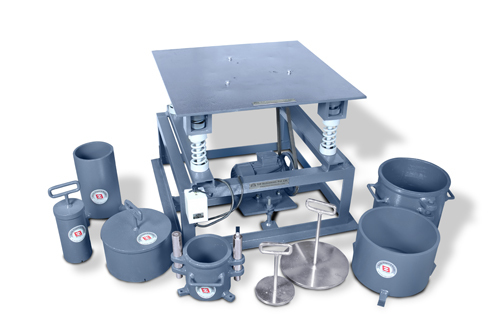
A: Included accessories are: plunger, annular weights, cutting collar, spacer disc, surcharge weights, dial gauge, and proving ringfacilitating efficient sample preparation and ensuring all aspects of the CBR test can be performed according to standard methods.
Q: What are the benefits of using a motorized, digital CBR apparatus in laboratory testing?
A: Motorized operation enhances consistency and reduces manual labor, while the digital display offers instantaneous load readings with 1% accuracy. The sturdy, powder-coated construction and comprehensive accessories improve durability, efficiency, and compliance in geotechnical soil analysis.
 Call Us : 08045477242









 Send Inquiry

 Send Inquiry
 Send Inquiry
 Send SMS
 Call Me Free