 Call Us : 08045477242


|
Applications:
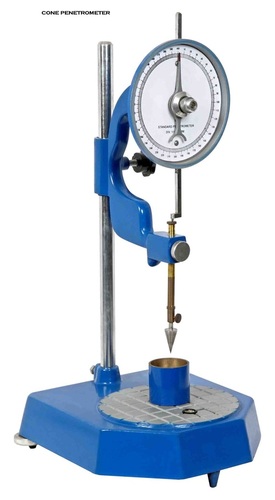
Apparatus for determination of liquid limit of soils by cone penetration method.
Details:
The base, pillar bracket, plunger, release mechanism, dial rack and cone. The mass of the plunger along with its components when assembled with the pin, fixed at the bottom of the rack, will be in line and concentric with the plunger assembly. Supplied complete with Brass test cup of size 50 mm ID X 50 mm Height.
Furtherdetails available on our website.
The Price mentioned here are subject to change as per the capacity,specifications and application of the user.

Price:
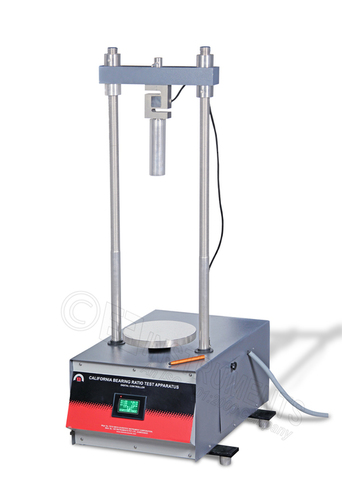
Price 135000.00 INR / Piece
Minimum Order Quantity : 1 Piece
Automation Grade : Semiautomatic
Application : Laboratory Determination of California Bearing Ratio for Soil and Subgrade Materials
Usage : Laboratory Soil Testing
Machine Weight : Approx. 90100 kg
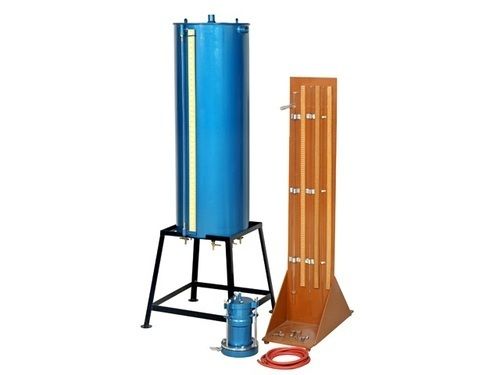
Price 1.00 INR / Piece
Minimum Order Quantity : 1 Piece
Automation Grade : Manual
Application : Determination of soil permeability using constant and variable head method
Usage : Laboratory testing of soil permeability
Machine Weight : Approx. 40 kg
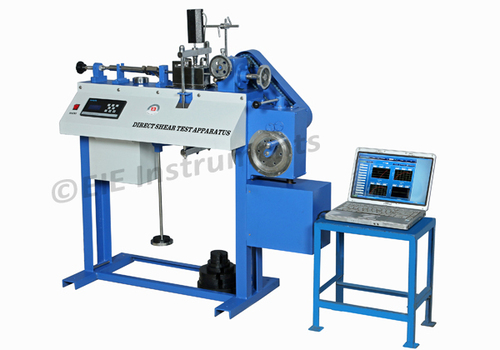
Price 270000.00 INR / Piece
Minimum Order Quantity : 1 Piece
Automation Grade : Automatic
Application : The test covers the determination of consolidated drained or undrained shear strength of a soil material by direct shear.
Usage : Soil Testing Equipment
Machine Weight : 60 Kg (approx.)
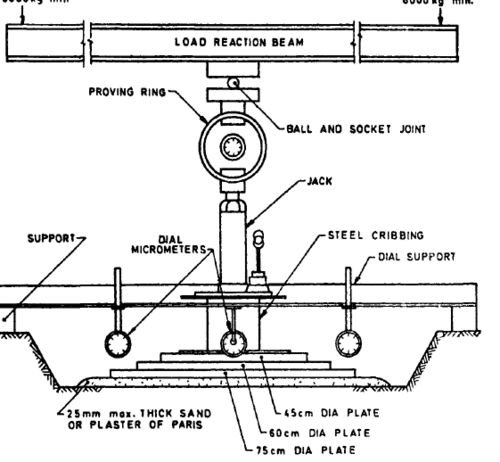
Price 245000.00 INR / Piece
Minimum Order Quantity : 1 Piece
Automation Grade : Manual
Application : Modulus of Subgrade Reaction (KValue) Determination
Usage : Soil Testing Equipment
Machine Weight : Approx. 65 kg

 |
EIE INSTRUMENTS PVT. LTD.
All Rights Reserved.(Terms of Use) Developed and Managed by Infocom Network Private Limited. |




 Send Inquiry

 Send Inquiry
 Send Inquiry
 Send SMS