Apparatus for Solubility In Tri-Chloro Ethylene - METHOD A FOR ASPHALTIC BITUMEN About
Compliance With Following National / International Standards:
IS 1216
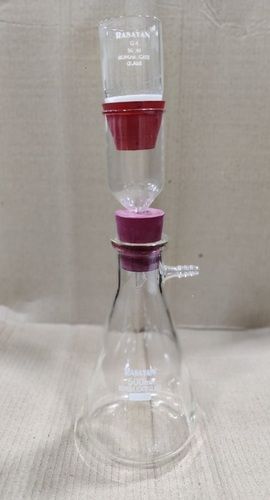
APPARATUS FOR SOLUBILITY IN TRI-CHLORO ETHYLENE-IS 1216 - METHOD A (FOR ASPHALTIC BITUMEN)
Further details available on our website.
Price and specifications mentioned here are subject to change as per the application, customer requirements and prevailing market conditions. Please refer to us for the final rates and offer.
Efficient Bitumen Solubility TestingDesigned for labs engaged in petroleum and material quality assurance, this apparatus enables the hot extraction of asphaltic bitumen using tri-chloro ethylene or similar solvents. Thanks to its IS 1216 compliance, reliable accuracy and reproducibility of results are ensured.
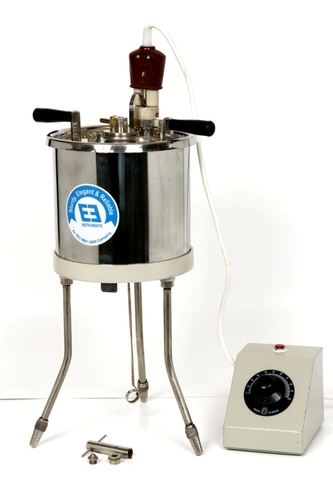
User-Friendly and Safe OperationAssembly is straightforward, usually completed in five minutes without the need for vacuum pumps. Key safety featureslike heat-resistant handles, a secure clamping system, and a stable standmake routine use safe, even at elevated temperatures encountered during solubility tests.
Durable, Corrosion-Resistant ConstructionWith a stainless steel or aluminum base and borosilicate glassware, the apparatus is built to withstand chemical exposure and frequent heating cycles. All glassware components can be fully removed for thorough cleaning, preserving performance and extending the equipments lifespan.
FAQs of Apparatus for Solubility In Tri-Chloro Ethylene - METHOD A FOR ASPHALTIC BITUMEN:
Q: How do I assemble the Apparatus for Solubility in Tri-Chloro Ethylene?
A: Assembly is quick and intuitive, typically taking about five minutes. Simply position the conical flask and beaker on the stable stand, secure the glass funnel and porous thimble, and use the metal clamp for stability. No vacuum pump is necessary, and all components fit together seamlessly.
Q: What is the primary benefit of this apparatus when testing bitumen?
A: It delivers accurate, consistent results for bitumen solubility using a hot extraction process, ensuring compliance with IS 1216. Its easy-to-clean design, controlled heating, and robust construction provide reliable and repeatable results crucial for material quality assurance.
Q: When should this apparatus be used?
A: This equipment should be used when determining the solubility of asphaltic bitumen in tri-chloro ethylene or equivalent solvents, particularly in laboratories involved in petroleum, highway, or materials testing. It is ideal for meeting IS 1216 method requirements.
Q: Where can this apparatus be operated?
A: It is suitable for well-ventilated laboratory environments within material testing facilities, research centers, or quality control units, especially those focused on highway or petroleum industries.
Q: What type of maintenance is required?
A: Routine maintenance involves removing the borosilicate glassware for thorough cleaning and ensuring clamps, handles, and the heating element remain free of residue. Its corrosion-resistant structure minimizes upkeep, promoting long-term reliability.
Q: How is temperature controlled during testing?
A: The integrated electric heater provides controlled heating for up to 1 litre of solvent, and temperature can be monitored and managed manually, supporting safe extractions at temperatures up to 250C.
Q: What safety features are incorporated in this apparatus?
A: Safety is enhanced through heat-resistant handles, a stable base, and a secure clamping system, safeguarding users during hot solvent operations and preventing accidental spills or breakage.
 Call Us : 08045477242









 Send Inquiry

 Send Inquiry
 Send Inquiry
 Send SMS