APPARATUS FOR FLOW TEST About
Applications
To determine the resistance of sealing compound to flow in hot weather.
Details of Moulds
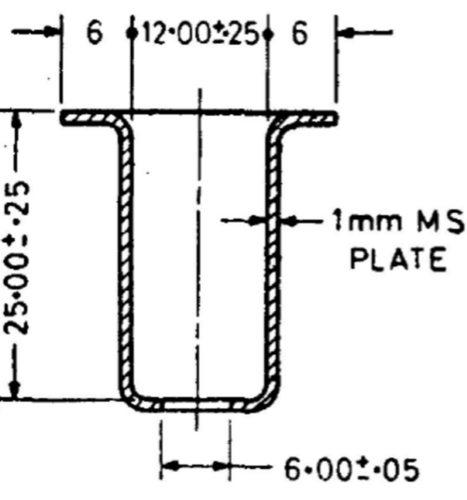
- Fabricated from 1 mm mild steel sheet
- Three Nos. moulds will be provided.
- Internal Dimensions
- 50 mm Length x 12 mm width x 25 mm depth
- Top of the mould will remain open and will be provided with the flange on either side
- A slot of 6mm wide will be cut along the base from end to end.
- Mould will be marked with identification marks on the flange
- Supplied complete with Frame to hang three moulds
Furtherdetails available on our website.
The Price mentioned here are subject to change as per the capacity,specifications and application of the user.
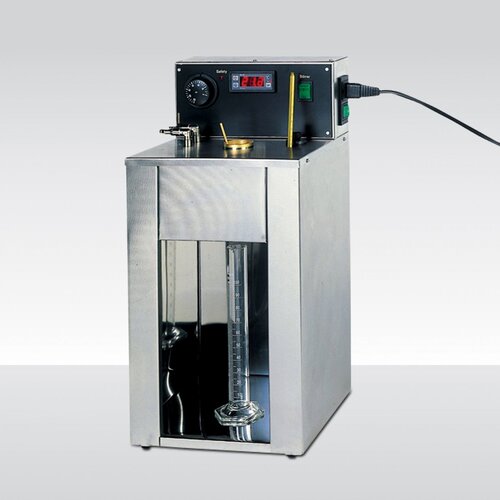
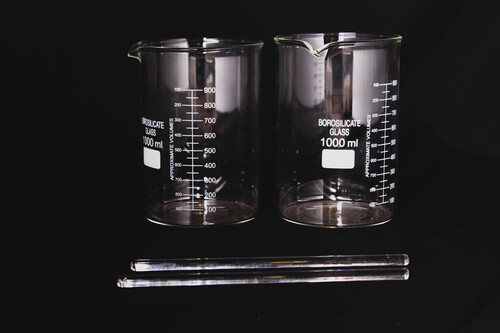
Robust Design and User-Friendly MaintenanceThis flow test apparatus is built with stainless steel and heat-resistant borosilicate glass for longevity and dependable use. Weighing approximately 2.5 kg with a rectangular shape, it is portable and resistant to corrosion. The polished, protective coating eases cleaning and maintenance, while all parts are easy to dismantle for thorough accessibility.
Precision Measurement and ComplianceOperating with standard IS/ASTM dimension holders, the apparatus features clear, graduated markings ensuring accurate and repeatable measurements. Its manual operation provides direct control, with accuracy up to 0.5 mm. The equipment fully conforms to national and international test methods for sealing compound flow evaluation.
Versatile Application for Bitumen TestingSuitable for both laboratory and onsite use, this apparatus handles samples up to approximately 1 litre. Adaptable to various environments with a usage range of 10C to 50C and a temperature resistance up to 120C, it is ideal for bitumen, asphalt, and sealing compound quality assessment, supporting construction and material verification needs.
FAQs of APPARATUS FOR FLOW TEST:
Q: How is the Apparatus for Flow Test operated?
A: This apparatus functions through manual operation and does not require electrical power. Simply set up the sample in the standardized cylindrical holder, fill up to the indicated graduated markings, and use an external heating arrangement if necessary to simulate testing temperatures.
Q: What types of samples are compatible with this apparatus?
A: It is designed for use with sealing compounds, bitumen, and asphalt. The apparatus accommodates up to approximately 1 litre sample volume, aligning with IS/ASTM cylindrical holder standards for reliable testing outcomes.
Q: When should the Apparatus for Flow Test be used?
A: Use this equipment when assessing the resistance of bitumen, asphalt, or sealing compounds to flow, particularly under elevated temperature conditions. It is essential for quality control in construction material testing, both in the lab and on site.
Q: Where can this apparatus be utilized?
A: Its robust manual design makes it suitable for laboratories, research facilities, and construction sites. The apparatus is portable and does not depend on electricity, making it adaptable to diverse working environments.
Q: What is the process for conducting a flow test?
A: Place the sample in the standard holder, position it on the apparatus, and heat (externally if required) to simulate desired conditions. Monitor the flow using the clear graduated markings, then record measurements manually, as per the test method guidelines.
Q: How does the design benefit users during testing?
A: Its corrosion-resistant construction, ease of cleaning, and manual controls allow for quick setup, precise measurements, and straightforward maintenance. The clear markings and robust build optimize usability and ensure accurate, repeatable results.
 Call Us : 08045477242









 Send Inquiry

 Send Inquiry
 Send Inquiry
 Send SMS