 Call Us : 08045477242


|
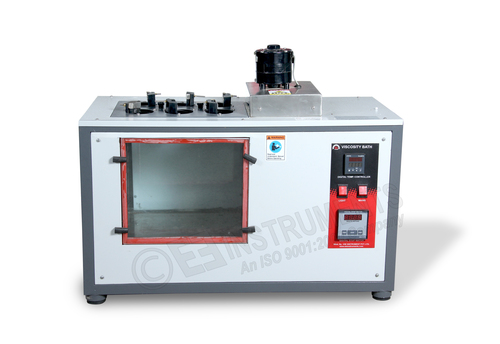
Compliance with following International Standards
ASTM D6371, IP 309, IS 1448 Part 110
Product details
| Power Source | Electric |
| Automation Grade | Manual |
| Brand | EIE |
| Model Name/Number | EIE-PTLT-126M |
| Voltage | 220V |

Price:
Price 333200.00 INR / Piece
Minimum Order Quantity : 1 Piece
Features : Stainless steel bath, digital PID controller, insulated body, builtin refrigeration, transparent top lid, programmable settings
Usage : PETROLEUM TESTING EQUIPMENTS
Product Type : ULTRA LOW TEMP. KINEMATIC VISCOSITY BATH (40C TO AMBIENT)
Power Supply : 230 V AC, 50 Hz, Single Phase
Minimum Order Quantity : 1 Piece
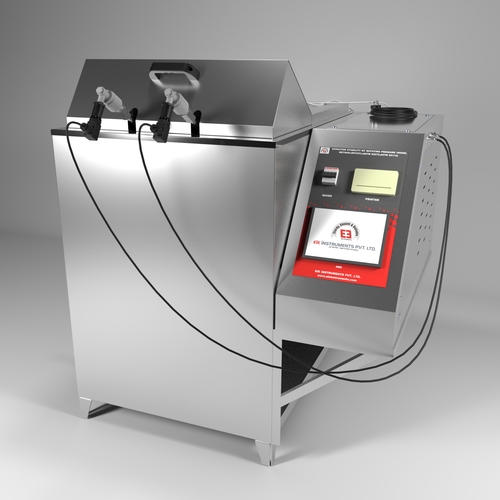
Features : Accurate results, Robust construction, Efficient working
Usage : Petroleum Testing Equipment
Product Type : OXIDATION STABILITY BY ROTATING PRESSURE VESSEL METHOD Electronic With Software
Power Supply : 230 Volts 50 Hz, Single Phase, Ac Supply
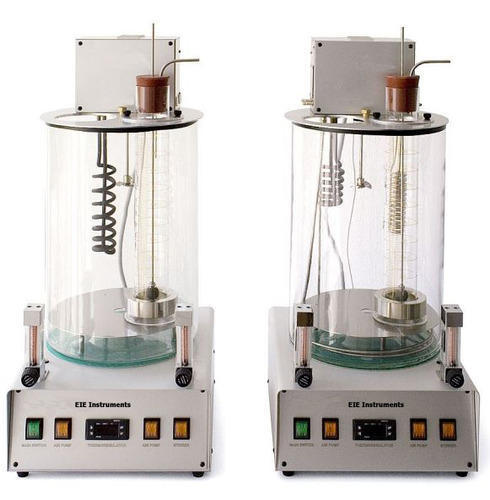
Price 380000.00 INR / Piece
Minimum Order Quantity : 1 Piece
Features : Accurate results, Robust construction, Efficient working
Usage : Petroleum Testing Equipment
Product Type : Foaming Characteristics of Lubricating Oil Four Test Cylinders Twin Jars
Power Supply : 230 volts, 50 Hz, Single phase, AC Supply
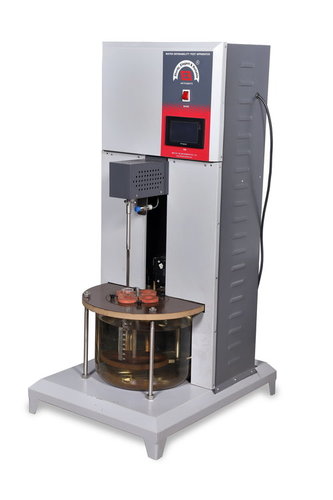
Minimum Order Quantity : 1 Piece
Features : Accurate results, Robust construction, Efficient working
Usage : Used for specification of new oils and monitoring of in service oils
Product Type : Emulsion TestWater Separability Test ApparatusAutomatic Lift and Placement
Power Supply : 230 Volts, 50 Hz, Single phase, AC Supply

 |
EIE INSTRUMENTS PVT. LTD.
All Rights Reserved.(Terms of Use) Developed and Managed by Infocom Network Private Limited. |




 Send Inquiry

 Send Inquiry
 Send Inquiry
 Send SMS
 Call Me Free