About Coarse Sieves
We are leading manufacturer and trading all testing equipment of various type
Introduction:-
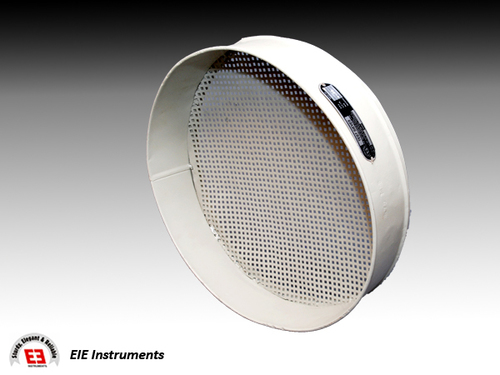
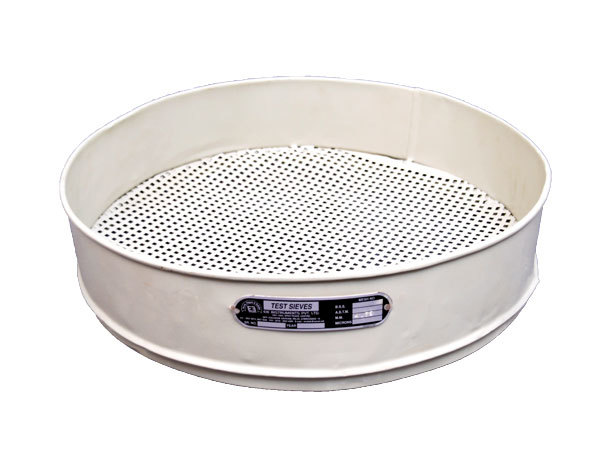
G.I. Frame Sieves (30 & 45 cms Dia)
| 125.0 mm | 40.0 mm | 12.5 mm |
| 106.0 mm | 37.5 mm | 11.2 mm |
| 100.0 mm | 31.5 mm | 10.0 mm |
| 90.0 mm | 26.5 mm | 9.5 mm |
| 80.0 mm | 25.0 mm | 8.0 mm |
| 75.0 mm | 22.4 mm | 6.7 mm |
| 63.0 mm | 20. 0 mm | 5.6 mm |
| 53.0 mm | 19.0 mm | 4.75 mm |
| 50.0 mm | 16.0 mm | 2.36 mm |
| 45.0 mm | 13.2 mm | 1.18 mm |
Lid and Pan
Note :- Price will be change as per specification
Reliable Construction and ComplianceCrafted from premium stainless steel, the frame and mesh of our coarse sieves are corrosion-resistant and deliver lasting durability. Each sieve conforms to IS 460, ASTM E11, and ISO 3310 standards, ensuring precise results in laboratory applications. The polished finish provides not only an aesthetic touch but also supports easy maintenance and cleaning, prolonging service life.
Versatile Testing CapabilitiesThese sieves are designed with a 200 mm diameter and support mesh sizes from 2 mm to 100 mm, allowing flexibility for various particle size analysis tasks. Accommodate up to 2 kg of specimen per sieve, and stack up to 7 sieves per set using the innovative interlocking design. This versatility is ideal for aggregate, sand, and soil grading in diverse laboratory environments.
Ease of Use and MaintenanceOperating the sieves is fully manual, making the process straightforward and reliable. Each set includes a pan and lid to prevent sample loss, while the stackable design optimizes space on the laboratory tabletop. Cleaning is simpleall components are washable, supporting routine maintenance and long-term performance.
FAQs of Coarse Sieves:
Q: How do I use the coarse sieves for particle size analysis?
A: To perform a particle size analysis, arrange up to 7 sieves with required mesh sizes in a stack, interlocked for security. Place your sample (up to 2 kg per sieve) in the top sieve and cover with the lid. Manually shake or rotate the set to separate particles according to size, then analyze each retained fraction as per laboratory protocols.
Q: What materials are the sieves made from and what is the benefit?
A: Each sieve is constructed with a stainless steel frame and mesh, providing robust corrosion resistance, high durability, and ensuring compliance with international testing standards. The polished finish adds ease of cleaning and minimizes material adhesion during testing.
Q: When should I clean and maintain the coarse sieves?
A: Sieves should be cleaned after every use to prevent residue buildup and maintain accurate results. The stainless steel construction allows for easy washing, while the polished surface helps in quick maintenance and prevents cross-contamination.
Q: Where are these coarse sieves typically used?
A: These sieves are widely used in laboratories for aggregate, sand, and soil analysis. They are suitable for use in educational, research, and industrial environments across India and other regions requiring compliance with IS, ASTM, or ISO standards.
Q: What is the process of ordering and packaging?
A: You can order as few as one set (MOQ: 1 set). Each set, consisting of sieves, pan, and lid, is securely packed in either a corrugated box or a wooden case to ensure safe delivery and easy handling.
Q: What is the advantage of the interlocking stackable design?
A: The interlocking design ensures that the sieves, pan, and lid stay securely stacked during testing, preventing spillage and ensuring reliable test results. This feature also saves space on the laboratory tabletop and makes handling more efficient.
Q: What compliance standards do the sieves meet and why does this matter?
A: These coarse sieves comply with IS 460, ASTM E11, and ISO 3310 standards. This ensures the accuracy and reliability of particle size analysis, making the sieves suitable for both national and international laboratory testing requirements.
 Call Us : 08045477242









 Send Inquiry

 Send Inquiry
 Send Inquiry
 Send SMS
 Call Me Free