About Field Density Test Apparatus
Applications:
Used to determine the in-situ density of fine grained compacted soil
Details:
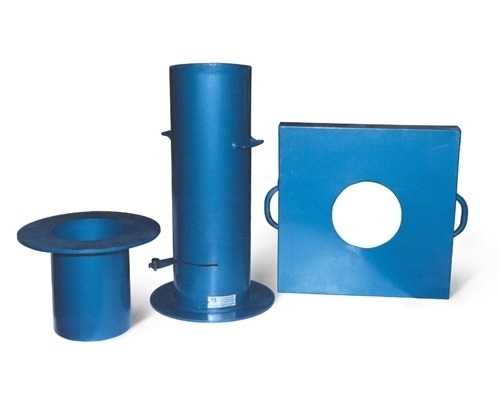
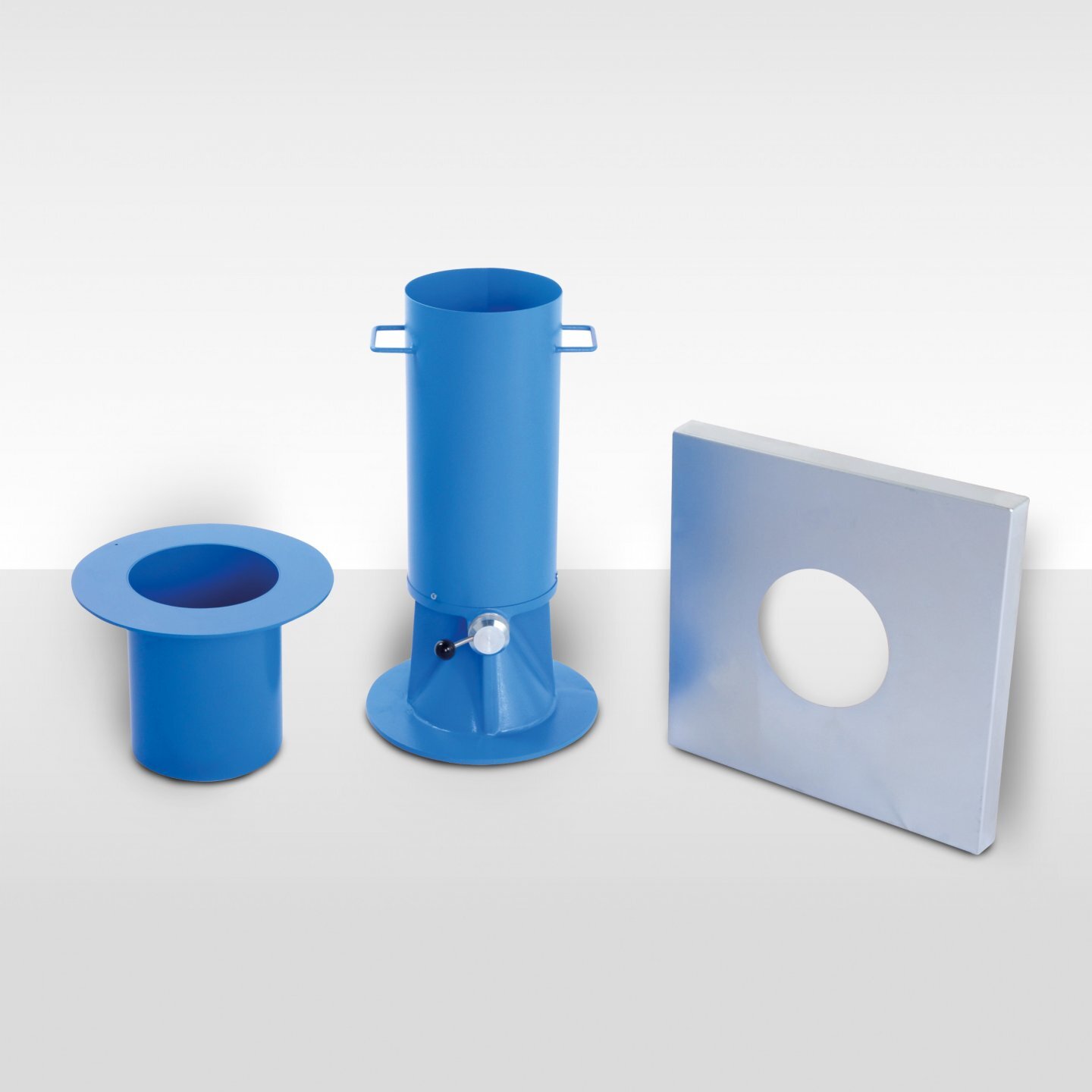
- The Complete set consists of a pouring cylinder, calibration container and tray.
- The sand pouring cylinder is made of cast aluminum and precisely machined.
- The calibration container and tray are made of plated sheet steel.
- Sand pouring cylinder : 115mm Diameter
- Calibrating container: 100 mm Diameter and 150 mm depth
- Density Tray : 300 mm x 300 mm x 40 mm thick with hole of 100 mm in the center
Note:
Without Excavating tools, Glass Plate, Electronic Balance, Metal containers, Standard Sand, Rapid Moisture meter, Laboratory Oven etc. which are essential for the complete test.
Furtherdetails available on our website.
The Price mentioned here are subject to change as per the capacity,specifications and application of the user.
Optimal Accuracy in Soil TestingEngineered to deliver results with a high accuracy of 1%, the Field Density Test Apparatus is suitable for determining bulk soil density ranging up to 30 kN/m. The sand pouring cylinder, precisely graduated, ensures exact volume measurements, providing reliable data for geotechnical analysis.
Durability and Portability for Field UseManufactured from high-grade mild steel and finished with corrosion-resistant coatings, this apparatus withstands challenging environments. Its modular, portable design makes it practical for both laboratory and field conditions, supporting effortless transport from site to site.
Complete Set of Essential AccessoriesSupplied with a conical funnel, base plate, calibration container, and an optional carrying case, the apparatus is ready for immediate use. Each component is crafted for ease of assembly and long-term service. The versatility in base plate size adds to its adaptability for various testing scenarios.
FAQs of Field Density Test Apparatus:
Q: How is the Field Density Test Apparatus used in soil testing?
A: The apparatus is used to determine the in-situ density of fine-grained compacted soils. The sand pouring cylinder is filled with calibrated sand, which is poured into a test pit through a conical funnel. The volume of sand displaced is measured using the graduations on the cylinder, and this is used to calculate the bulk density of the soil.
Q: What are the primary benefits of using this apparatus in the field?
A: Key benefits include high measurement accuracy (1%), portability for on-site testing, robust construction with corrosion resistance, and the ability to test bulk densities up to 30 kN/m. The manual operation eliminates the need for electricity, making it suitable in remote or outdoor environments.
Q: When should a Field Density Test Apparatus be employed?
A: It is typically used during construction or geotechnical projects to ensure that compacted soil meets required density specifications. Employ the device whenever you need to check the compaction quality of fine-grained soils during roadworks, foundations, or embankment construction.
Q: Where can the Field Density Test Apparatus be used effectively?
A: The device is suitable for both laboratory and field settings. Its durability and compact design allow for effective use in a variety of environments, especially on construction sites requiring in-situ soil density verification.
Q: What is the process to perform a field density test using this apparatus?
A: First, excavate a test pit and collect the removed soil. Weigh the soil, then use the sand pouring cylinder to fill the pit and measure the sand volume used. The bulk density is determined by dividing the mass of the excavated soil by the volume of sand poured into the pit.
Q: What accessories are supplied with the apparatus?
A: The apparatus is supplied with a conical pouring funnel, interchangeable base plates (200 mm and 250 mm diameter), a calibration container with known volume (1 liter or as specified), and an optional carrying case for easy transportation.
 Call Us : 08045477242









 Send Inquiry

 Send Inquiry
 Send Inquiry
 Send SMS
 Call Me Free