 Call Us : 08045477242


|
Application:
Salient Features of the machine:
Further details availableon our website.
The Price mentioned here are subject to change as per the capacity,specifications and application of the user.
Technical Details 
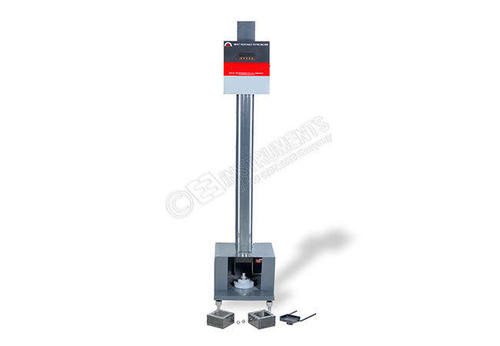

Price:
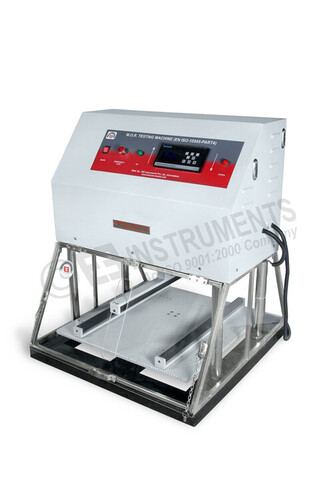
Price 185000.00 INR / Piece
Minimum Order Quantity : 1 Piece
Features : Automatic data recording; overload protection; userfriendly operation
Usage : MOR (Modulus of Rupture) test for ceramic bars or tiles
Product Type : Tiles and Ceramics Testing Machine
Automation Grade : Semiautomatic
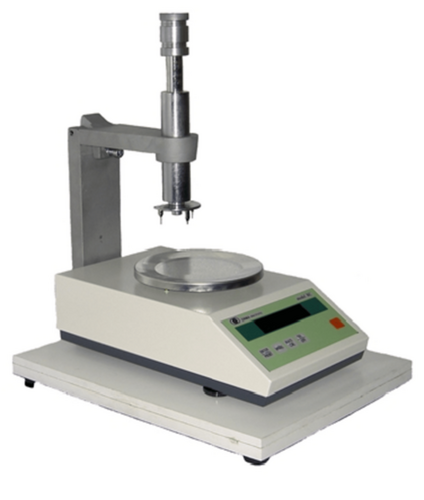
Price 150000.00 INR / Piece
Minimum Order Quantity : 1 Piece
Features : Nondestructive, accurate, easy to use; special safety enclosure for mercury handling
Usage : Tiles and Ceramics Testing Equipment
Product Type : BULK DENSITY APPARATUS FOR GREEN CERAMIC TILES MERCURY METHOD
Automation Grade : Manual
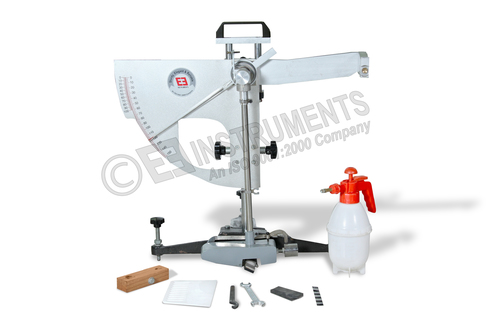
Minimum Order Quantity : 1 Piece
Features : Accurate results, Robust construction, Efficient working
Usage : Used to measure the resistance value of the asphalt pavement marking, stone etc.
Product Type : Skid Resistance Tester
Automation Grade : Semi Automatic
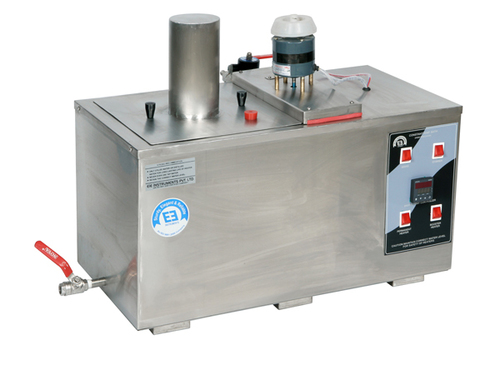
Minimum Order Quantity : 1 Piece
Features : Accurate results, Robust construction, Efficient working
Usage : Tiles and Ceramics Testing Equipment
Product Type : Determination of Moisture Expansion Using Boiling Water for Unglazed Tile
Automation Grade : Semi Automatic

 |
EIE INSTRUMENTS PVT. LTD.
All Rights Reserved.(Terms of Use) Developed and Managed by Infocom Network Private Limited. |





 Send Inquiry

 Send Inquiry
 Send Inquiry
 Send SMS
 Call Me Free